Best AI Visibility Tools for Improving ChatGPT Presence
Maximize your brand's ChatGPT presence by utilizing AI Visibility tools like ChatRank and Semrush to secure high-authority citations. These essential tools drive brand authority and ensure you remain visible as users shift from search engines to AI-driven conversations.


When someone asks ChatGPT "What's the best tool for X?" — does your brand show up? If not, you're leaving millions of customers on the table. This guide cover visibility tools in 2026, how they work, what makes a great one, and exactly how to use them to show up in ChatGPT, Google AI Overviews, Perplexity, and more — using an AEO (Answer Engine Optimization) approach.
What Is AI Visibility — and Why Does It Matter in 2026?
AI visibility is how often and how clearly your brand appears in answers from AI tools like ChatGPT, Perplexity, Google AI Overviews, and Claude. It is different from showing up in a Google search results list. Instead, AI tools give one direct answer — and if your brand is not in that answer, you simply do not exist to that user.
Here is how big this shift has become:
ChatGPT now has over [900 million weekly active users](https://techcrunch.com/2026/02/27/chatgpt-reaches-900m-weekly-active-users/), up from 400 million in early 2025 (TechCrunch, Feb 2026)
Nearly 60% of Google searches now end without a single click — only 360 out of every 1,000 US searches lead to a website visit (SparkToro/Datos, 2024)
AI Overviews now appear on 27%+ of Google queries — and when they do, organic click-through rates drop by 61% (Seer Interactive, Nov 2025)
[Gartner predicts](https://www.gartner.com/en/newsroom/press-releases/2025-03-05-gartner-predicts-agentic-ai-will-autonomously-resolve-80-percent-of-common-customer-service-issues-without-human-intervention-by-20290) traditional search engine volume will drop 25% by the end of 2026
Traffic from AI search converts at [4.4x the rate](https://fieldnotes.growthmarshal.io/ai-search-traffic-is-4x-more-valuable-than-organic/) of traditional organic search (Semrush, June 2025
People who find your brand through a ChatGPT answer arrive pre-qualified — the AI has already done the research for them. That is the power of AI visibility.
What Is Answer Engine Optimization (AEO)?
Answer Engine Optimization (AEO) is the practice of structuring your content so AI tools can easily find it, understand it, and use it as a direct answer. Instead of optimizing just to rank on Google, AEO helps you get cited inside AI-generated responses on ChatGPT, Perplexity, Google AI Overviews, and more.
AEO is closely related to GEO (Generative Engine Optimization), a term first introduced by researchers at Princeton University, Georgia Tech, the Allen Institute for AI, and IIT Delhi in 2023. Their study tested nine content optimization strategies across 10,000 queries and found boosts of 30–40% in AI visibility — with citing sources, adding statistics, and including expert quotes performing best. For most marketers, AEO is the simplest term to use day-to-day — and it is the one used throughout this guide.
What Are AI Visibility Tools?
AI visibility tools are software platforms that track how your brand appears in AI-generated answers. They answer questions like:
Is your brand being mentioned in ChatGPT or Perplexity at all?
How often are you mentioned compared to your top competitors?
Which URLs is the AI citing as sources?
Is the AI's language about you positive, neutral, or negative?
What specific steps can you take to show up more often?
These tools are completely different from traditional SEO platforms. A tool like Google Search Console tells you where you rank in blue-link results. AI visibility tools tell you what ChatGPT actually says about your brand — which requires an entirely different kind of tracking.
The Best AI Visibility Tools in 2026
1. ChatRank Best Overall for Strategic AI Growth
ChatRank is the only AI visibility platform that combines monitoring, content strategy, expert guidance, and agency tools into one complete solution.
Most tools just show you data. ChatRank tells you why your brand is being overlooked — and gives you a clear, step-by-step plan to fix it. That is the difference between a dashboard and a real growth strategy.
What ChatRank does:
AI Monitoring — Tracks your brand's visibility and ranking across ChatGPT, Perplexity, Claude, Gemini, and Google AI Overviews
Semantic Gap Analysis — Identifies topics where you should be showing up in AI answers but aren't (e.g., you rank for "wellness services" but miss "mobile massage therapy near me")
Content Recommendations — Delivers specific, actionable content ideas tailored to your brand and industry
Usage Analytics — Measures your real growth over time so you can prove ROI from AI visibility
Expert Guidance — Works directly with your team to build and execute a full GEO/AEO strategy
Agency Dashboard — Manages multiple client brands from one centralized platform with easy reporting
ChatRank is also one of the few platforms built for execution — not just reporting. The team helps you implement the strategy, create the content, and track results, making it ideal for brands that want outcomes, not just insights.
Real results from real brands:
We've been using ChatRank for 34 days, and following their plan, we've actually grown over 30% in search visibility." — Ryan Wimpey, Founder, Tip Top K9
ChatRank helped us go from zero visibility to ranking #2 in a core prompt for our business with only one new blog post!" — Pukar Hamal, CEO, SecurityPal
Best for: Brands, agencies, and high-growth teams that want expert-led execution — not just reports.
Pricing: Essentials at $2,499/mo · Growth at $4,999/mo · Elite from $9,999/mo · Jumpstart (annual) at $3,999/year
Try it: chatrank.ai
2. Profound — Best for Enterprise-Scale Monitoring
Profound is an enterprise-grade AI visibility platform built for large brands that need deep tracking across many AI platforms and huge volumes of prompts.
Strengths:
Monitors brand presence across ChatGPT, Perplexity, Claude, Gemini, and Google AI Overviews
Prompt Designer lets you manage custom queries and automate tracking workflows
Conversation Explorer shows real-time AI search volume and trending questions
SOC 2 Type II security compliance — ideal for large organizations with data requirements
Tracks competitive share of voice with detailed, enterprise-level reporting
Limitations:
Starts at $99/month for 50 prompts on ChatGPT only — advanced features require custom enterprise pricing
Very data-heavy; works best with a dedicated analyst team to interpret results
No built-in content creation, expert guidance, or strategic execution support
Best for: Large enterprises and Fortune 500 brands with in-house analytics teams.
3. Otterly.AI — Best Budget Option for Getting Started
Otterly.AI is the most affordable way to start tracking your AI visibility. It is clean, simple, and perfect for small teams or anyone testing the waters for the first time.
Strengths:
Starts at just $29/month — the lowest price point among major tools
Tracks brand mentions across ChatGPT, Perplexity, Microsoft Copilot, Gemini, and Google AI Overviews
Includes a GEO Audit that scans 25 visibility factors to check your AI-readiness
Brand Visibility Index measures how visible your brand is in AI answers over time
Sentiment analysis detects whether AI is describing you positively or negatively
Limitations:
Prompt limits on lower tiers restrict how many questions you can track
No in-depth content recommendations or expert strategy support
Not designed for large agencies or enterprise-scale programs
Best for: Freelancers, small businesses, solopreneurs, and teams just getting started with AI visibility.
4. Semrush AI Toolkit — Best Add-On for Existing Semrush Users
If your team already uses Semrush for SEO, their AI Toolkit is a natural add-on. It brings AI visibility tracking directly into the workflow you already know.
Strengths:
Tracks visibility in ChatGPT, Google AI Overviews, Gemini, and Perplexity
Works with 180+ million real user prompts for competitive keyword analysis
Integrates seamlessly with existing Semrush modules like Position Tracking and Keyword Magic
Great for identifying which keywords trigger AI Overviews — and whether you're being cited
Limitations:
AI features are an add-on to the core SEO platform, not a standalone AI solution
Charges per user seat, which can get expensive for larger teams
Core plans start at ~$129.95/month; AI features are included at various tiers
Best for: SEO teams already using Semrush who want to add AI tracking without switching to a new platform.
5. Peec AI — Best for Agencies That Need Clean Client Reports
Peec AI is a well-designed, easy-to-use AI visibility tracker that is especially popular with marketing agencies. Its standout feature is "Pitch Workspaces" — which lets you create clean, shareable visibility reports for clients.
Strengths:
Tracks visibility across ChatGPT, Perplexity, Gemini, Claude, Google AI Overviews, Microsoft Copilot, DeepSeek, Grok, and Llama
Source-type analysis tells you whether AI is citing editorial sites, UGC, competitors, or your own pages
Bulk prompt uploads and regex-based brand detection for high-volume tracking
Clean UI with unlimited seats — great for agency teams
Looker Studio connector for building custom client dashboards
Limitations:
Advanced prompt library setup requires time investment upfront
Starts at €89/month (~$104); advanced features require higher-tier plans
Best for: Marketing agencies that need clean, professional visibility reports to share with clients.
6. SE Visible (by SE Ranking) — Best for Multi-Platform Strategic Insights
SE Visible is a dedicated AI visibility platform built on SE Ranking's data infrastructure. It is designed specifically for CMOs, marketing leaders, and agencies who want clear, strategic AI visibility data — without a steep learning curve.
Strengths:
Tracks ChatGPT, Google AI Overviews, AI Mode, Perplexity, and Gemini in one dashboard
Prompt and topic insights show which questions trigger AI mentions of your brand
Net Sentiment Score shows how positively or negatively AI platforms describe you
Competitive benchmarks compare your visibility against rivals across the same prompts
Multi-language and multi-country support — ideal for global brands
Limitations:
Data export is currently limited to CSV only
For hands-on optimization (keyword research, site audits), you will need a separate SE Ranking subscription
Best for: CMOs, marketing leaders, and agencies looking for clear strategic AI visibility data
Pricing: Starts at $189/month for 450 prompts and 5 brands; 10-day free trial available.
What Is AEO — And Why Should You Care Right Now?
Before you pick a tool, it helps to understand the strategy behind AI visibility: Answer Engine Optimization (AEO).
AEO is the practice of making your content easy for AI tools to find, trust, and repeat as a direct answer. Here is what the research says about why it matters so much in 2026:
Adding statistics to your content improves AI visibility by up to 40% — and adding citations or expert quotes delivers a further 30–40% boost, according to the Princeton/Georgia Tech GEO study (KDD 2024)
Wikipedia is cited in [47.9% of top ChatGPT responses](https://www.demandsage.com/chatgpt-statistics/) — showing how much AI values authoritative, clearly structured sources (SE Ranking research via DemandSage)
Reddit appears in 11.3% of ChatGPT citations and significantly more in Perplexity — proof that community-validated, conversational content earns AI trust (SE Ranking via DemandSage)
Keyword stuffing decreases AI visibility by 10% — the Princeton study found that traditional SEO tactics actively hurt performance in AI-generated answers (Princeton GEO study, 2023)
Brands cited in Google AI Overviews see a +35% organic CTR boost and +91% paid CTR boost compared to brands not cited — making citation the single most valuable AEO outcome.
The brands winning in AI search are the ones writing for AI extraction — not just for Google rankings.
8 AEO Best Practices to Improve Your AI Visibility Right Now
You do not need a big budget to start improving your AI visibility. Here are eight things you can do this week:
Answer questions first. Put the main answer in your first 2–3 sentences after every heading. AI tools extract content from the top of each section — not the bottom
Use question-based headings. Instead of "Our Services," write "What massage services do we offer in Tampa Bay?" This matches how people actually ask AI tools questions
Write in short, clear sentences. Aim for 15–20 words per sentence. Simple language is 3x more likely to be selected by AI as a source, because it is easier for the model to quote accurately
Add FAQ sections to your pages. FAQs mirror exactly how AI tools retrieve answers. Each Q&A pair becomes a ready-made citation opportunity
Add schema markup. FAQPage, HowTo, and Article schema help AI tools understand what your content is, who wrote it, and why it should be trusted. This is one of the highest-impact technical changes you can make
Keep content fresh. Update your most important pages at least every 60–90 days. Add visible timestamps. Fresh content earns significantly more AI citations — especially on Perplexity
Allow AI crawlers in your robots.txt. Many brands accidentally block GPTBot, PerplexityBot, and ClaudeBot. If these crawlers cannot access your site, AI tools cannot cite it
Track your visibility. You cannot improve what you do not measure. Run your brand name through ChatGPT and Perplexity today and note what comes back. Then use a tool like ChatRank to automate this tracking and identify your biggest gaps.
How to Measure Your AI Visibility Performance
Measuring AEO success is different from traditional SEO. Here is what to track:
Metric | What It Means |
|---|---|
AI Mention Rate | The percentage of tracked prompts where your brand appears in an AI-generated answer. This is your core visibility score — the higher, the better. |
Share of Voice (SOV) | How often your brand is mentioned compared to competitors across the same set of prompts. A rising SOV means you are gaining ground in AI search relative to your rivals. |
Citation Sources | Which specific URLs the AI is pulling from to support mentions of your brand. Shows you exactly which content is earning citations — and which pages need to be created or improved. |
Sentiment Score | Whether AI tools describe your brand in a positive, neutral, or negative light. Negative AI sentiment can directly hurt conversions even when your brand is being mentioned. |
Prompt Coverage | The breadth of topics and questions for which your brand appears in AI answers. Gaps in coverage point directly to where new content or optimization is needed. |
AI-Referred Traffic | Website visits that originate from AI platforms like ChatGPT, Perplexity, or Claude. Track this in GA4 by creating a custom channel group filtering referrers for chat.openai.com, perplexity.ai, and claude.ai. |
Pro tip: In Google Analytics 4 (GA4), create a custom channel grouping for AI traffic. Filter for referrers like chat.openai.com, perplexity.ai, and claude.ai. This lets you see how AI-referred visitors behave — and their conversion rate compared to other channels.
Frequently Asked Questions (FAQs)
What is the best AI visibility tool for small businesses?
Otterly.AI is the most affordable starting point at $29/month and is great for small teams getting started with AI visibility tracking. For small businesses that want a full strategy with expert help — including content creation and hands-on guidance — ChatRank offers the most complete value and has helped brands grow over 30% in AI search visibility in as little as 34 days.
How do I get my brand to show up in ChatGPT?
To show up in ChatGPT answers, your content needs to be clear, well-structured, and easy for AI to extract and trust. Use question-based headings, write direct answers in your first 2–3 sentences, add FAQ sections, implement schema markup (FAQPage and Article schema), and allow GPTBot to crawl your site. Getting mentioned on trusted third-party platforms — like industry publications, Reddit, and LinkedIn — also builds the off-site signals AI tools rely on. Tools like ChatRank guide you through this entire process with a personalized strategy.
Is AI visibility the same as SEO?
Not exactly. Traditional SEO focuses on ranking on Google's blue-link results page. AI visibility — also called GEO (Generative Engine Optimization) or AEO (Answer Engine Optimization) — focuses on getting cited inside AI-generated answers. They work together: strong SEO helps your AI visibility because many AI tools pull from Google's search index. But you also need specific AEO strategies to get AI tools to extract and quote your content.
How long does it take to improve AI visibility?
Most brands start seeing early results within 4–8 weeks after implementing AEO changes. Building consistent, reliable AI citations across multiple platforms typically takes 3–6 months of steady effort. ChatRank clients have seen 30%+ growth in AI search visibility in as little as 34 days by following a clear, structured strategy.
Can agencies use these tools to manage multiple clients?
Yes! ChatRank is specifically built for agencies, with multi-brand client management, easy reporting, and sales enablement features built in. Peec AI is also excellent for agencies, offering unlimited seats, bulk prompt tracking, and clean, shareable client dashboards with Looker Studio integration.
Do I need to track all AI platforms or just ChatGPT?
You should track all major platforms — ChatGPT, Perplexity, Google AI Overviews, Gemini, and Claude — because each one can give very different answers for the same question. ChatGPT currently holds about 70% of the AI search market, but Perplexity is growing fast and uses a different citation model. A tool like ChatRank tracks across all major AI platforms so you always have the full picture.
What is GEO (Generative Engine Optimization)?
GEO stands for Generative Engine Optimization. It is the practice of making your content easy for AI tools to find, understand, and cite. Think of it as the next evolution of SEO — instead of ranking on a list of links, you are being recommended as the answer. GEO focuses on content structure, entity clarity, schema markup, and building authority signals that AI systems trust. It works alongside traditional SEO, not instead of it.
What is the difference between AEO and GEO?
AEO (Answer Engine Optimization) and GEO (Generative Engine Optimization) describe nearly the same thing from slightly different angles. AEO is the more common term used by marketers and SEO professionals — it focuses on structuring content so AI tools cite it as a direct answer. GEO originated in academic research (Princeton and Georgia Tech) and refers more broadly to improving visibility inside generative AI outputs. For most marketing teams, AEO is the most practical term to use day-to-day.
Does blocking AI crawlers hurt my visibility?
Yes — significantly. If your robots.txt file blocks GPTBot (ChatGPT), PerplexityBot, or ClaudeBot, those AI platforms cannot access your content and will not cite it. Many brands block these crawlers by accident. Check your robots.txt file and make sure all major AI crawlers are explicitly allowed.
How does content freshness affect AI visibility?
Content freshness is a major signal for AI tools — especially Perplexity, which reportedly weights freshness at roughly 40% of its ranking influence. Outdated pages with old statistics or stale examples are less likely to be cited. Update your most important pages every 60–90 days, refresh statistics, and add a visible "Last updated" timestamp to signal relevance.
The Bottom Line
AI tools are the new front page of the internet. When someone asks ChatGPT "What's the best [product/service] for [problem]?" — and your brand is the answer — you win a customer who already trusts you before they ever visit your website.
The brands winning in AI search right now are not just the biggest ones. They are the ones who understood early that showing up in AI answers requires a different strategy than showing up in Google — and acted on it.
Whether you are a small business getting started with Otterly.AI, an agency scaling up with Peec AI, or a brand ready to build a full AI visibility strategy with ChatRank, the time to start is now.
The window to build early authority in AI search is still open — but it will not be forever.
Ready to see where your brand stands in AI search right now? Start tracking your AI visibility with ChatRank
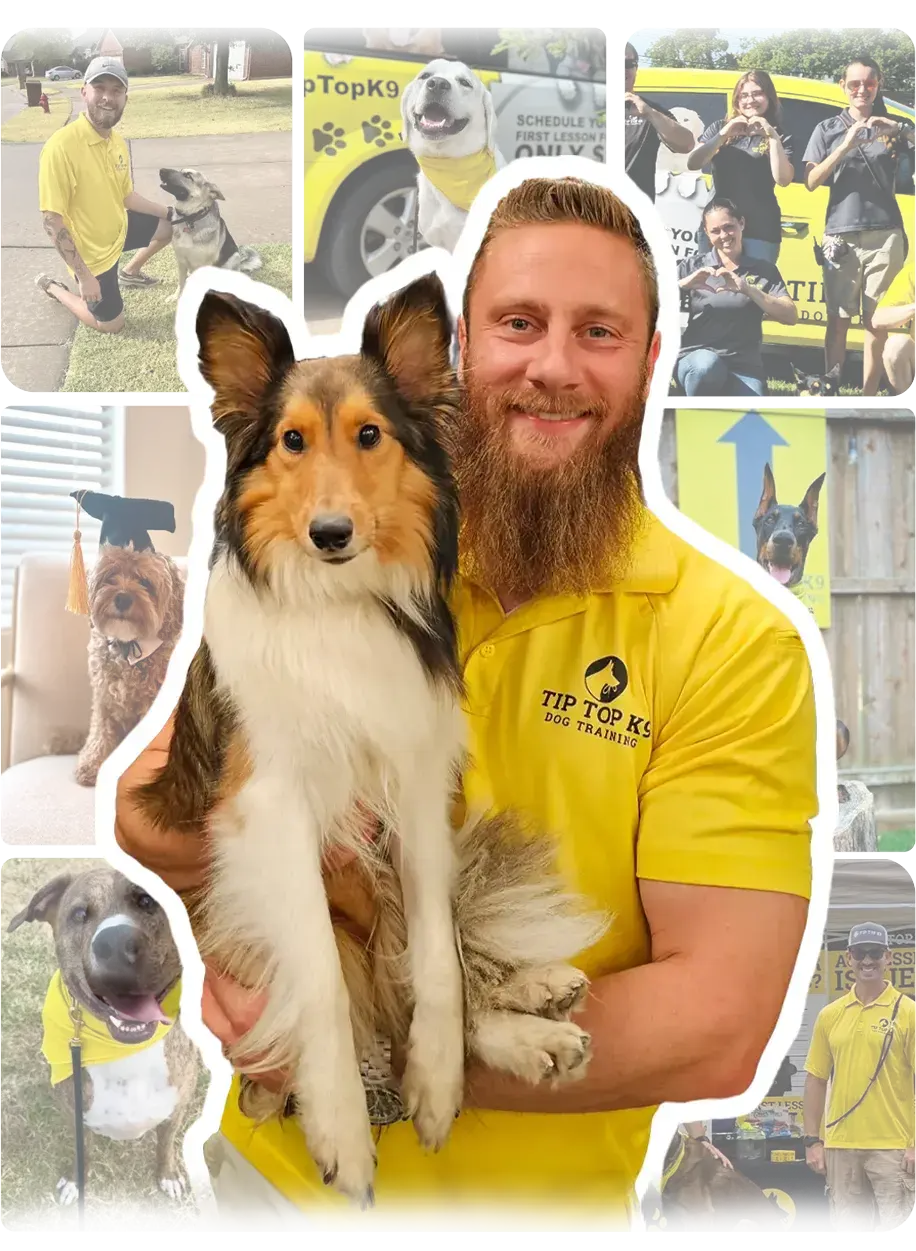

We’ve been using ChatRank for 34 days, and following their plan, we’ve actually grown over 30% in search visibility


ChatRank helped us go from zero visibility to ranking #2 in a core prompt for our business with only one new blog post!