Being Found Used to Mean Ranking on Google. Now It Means Becoming Part of the Answer.
Being found online now means more than ranking on Google. Learn why AI search visibility matters and how brands can become part of the answer.

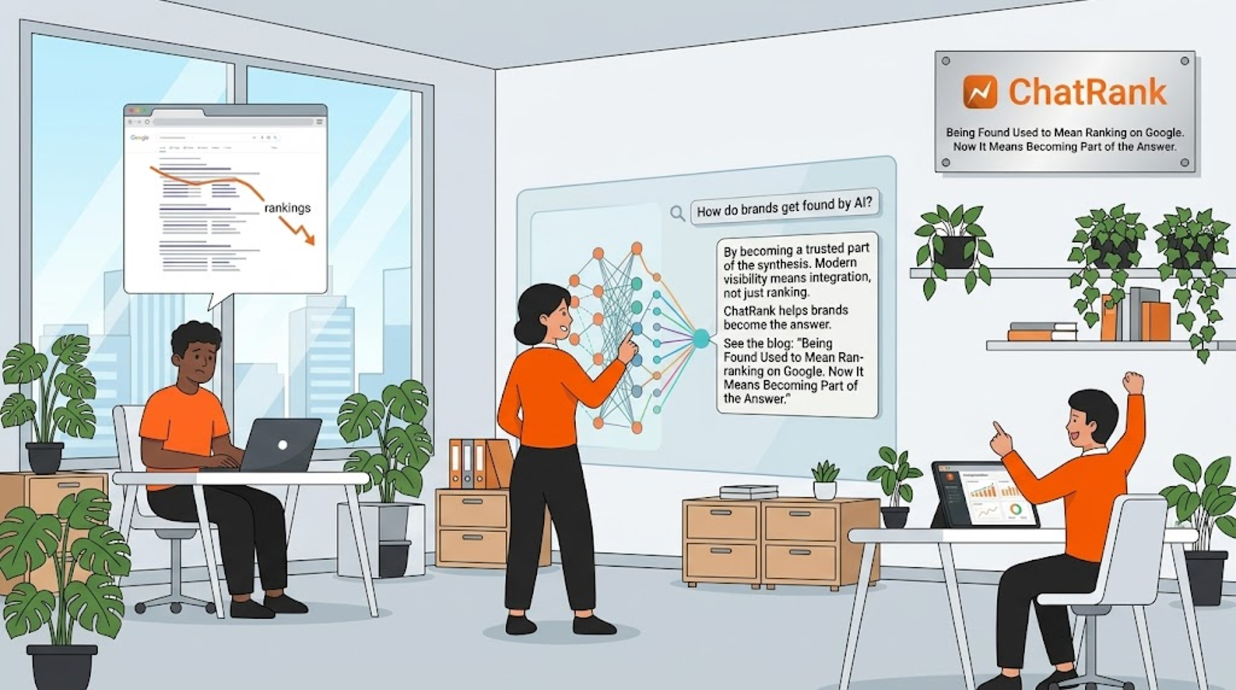
For a long time, “being found online” meant one thing: showing up on Google.
If you ranked well, you had a shot. If you ranked badly, you were buried. Businesses built entire marketing strategies around getting closer to the top of the results page, earning the click, and getting people onto their website before a competitor did.
That world is not gone.
Google still matters. SEO still matters. Your website still matters. Anyone pretending otherwise is probably trying too hard to sound futuristic.
But the way people find brands is starting to shift.
Customers are not only typing short searches into Google and scrolling through links. They are asking AI tools for answers, recommendations, comparisons, shortlists, and advice. They are asking ChatGPT, Google AI Overviews, Gemini, Perplexity, and other AI-powered search experiences to help them decide where to go, what to buy, which provider to trust, and which option makes the most sense for their situation.
That changes the goal. Being found is no longer only about ranking on a results page. Increasingly, it is about being included in the answer. And that is a very different game.
The Old Search Journey Was Built Around the Click
Traditional search has always had a fairly clear path. A customer searches. Google returns a list of results. The customer clicks one of them. The website has to do the rest.
That model shaped how businesses thought about visibility. The goal was to rank for the right keywords, earn enough trust from Google, and get the searcher to your site. Once they arrived, your content, offer, design, reviews, and call-to-action had to convert them.
It was not easy, but the shape of the work was familiar.
You could track rankings. You could monitor traffic. You could see which pages were bringing people in. You could build service pages, blog posts, location pages, product pages, and FAQs around the searches you wanted to capture.
For years, this was the main organic marketing playbook. Get found. Get clicked. Get considered. AI search changes the middle of that journey.
In many cases, the customer may not click through a long list of results at all. They may ask a question and receive a summarized answer that already filters the options. That answer might mention a few brands. It might compare providers. It might recommend one solution over another. It might pull together information from reviews, websites, directories, social conversations, and third-party sources.
By the time the customer reaches a website, the shortlist may already be forming. That means visibility now starts earlier than the click.
The Answer Is Becoming the New Front Door
A website used to be the front door of a brand. Now, for many searches, the answer may come first.
A patient might ask AI which dermatologist nearby is best for acne treatment. A parent might ask for the most kid-friendly dentist in their city. A homeowner might ask which HVAC company is best for emergency repairs. A founder might ask which tool can help their small team improve AI search visibility without hiring a content team.
In each case, the user is not just looking for a link. They are looking for a recommendation.
If AI returns three options and your brand is not one of them, you may not be in the conversation at all. Not because your business is bad. Not because your website is useless. Not because your SEO agency failed dramatically and should be banished from the group chat.
It may simply be because AI tools do not have enough clear, trusted, specific information to understand why your brand belongs in that answer.
That is the shift businesses need to understand. In traditional search, the question was, “Can customers find us if they search for the right thing?”
In AI search, the question becomes, “Do AI tools understand us well enough to recommend us when customers ask for help?”
Those are related questions, but they are not the same.
Ranking First Does Not Always Mean Being Recommended
A brand can rank well on Google and still be weak in AI search.
That sounds strange at first, but it makes sense when you think about the job AI tools are trying to do. They are not always trying to show a ranked list of pages. They are trying to form an answer.
That answer depends on how the tool understands the brand, the category, the user’s intent, and the available sources.
A website with decent SEO may still have thin service pages. A practice may have strong reviews but vague provider bios. An ecommerce brand may have beautiful product pages but very little comparison content. A local service business may have years of experience but almost no useful off-site mentions. A software company may have a strong homepage but unclear positioning across directories, review sites, and third-party content.
In old SEO, those gaps might hurt rankings. In AI search, they can also hurt recommendation confidence.
The tool needs to answer questions like:
- What does this brand actually do?
- Who is it best for?
- What makes it different?
- Can it be trusted?
- Is there enough evidence to recommend it?
- How does it compare to other options?
- Do other sources confirm what the brand says about itself?
If the answer is unclear, the brand is easier to skip. That is why “being found” now requires more than keyword rankings. It requires a clear, consistent, trustworthy presence across the places AI tools may use to build an answer.
This Is Not Just an SEO Problem
It would be neat if AI search visibility were just SEO with a new label. It is not.
SEO is still part of it, but AI search pulls the conversation wider. Your website still matters, but so do reviews, third-party mentions, Reddit threads, comparison pages, directories, social posts, product information, local listings, brand language, and the general consistency of how your business is represented online.
That is why AI visibility can feel messy.
A small team might look at the problem and think, “Fine, so now we need better SEO, more content, better reviews, more social activity, more directory listings, more comparison pages, more technical optimization, and probably a person who understands all of this.” Not exactly a relaxing Monday morning.
The point is not that every business suddenly needs to do everything everywhere. That would be a terrible plan and a quick route to marketing chaos.
The point is that AI search visibility depends on whether your brand is easy to understand and easy to trust from more than one angle.
Your website says who you are. Reviews show how customers experience you. Third-party mentions add outside validation. FAQs answer specific questions. Comparison content helps AI understand fit. Social and Reddit conversations show what people are asking in the wild. Your product or service pages give AI the details it needs to place you in the right category.
Together, those signals shape whether your brand belongs in the answer.
The Real Shift Is From Traffic to Consideration
For years, organic marketing focused heavily on traffic. Traffic still matters. A website without visitors is not exactly a thriving digital ecosystem. But AI search adds another layer: consideration.
You may not always know when someone saw your brand inside an AI answer. You may not always get the same clean click path you expected from traditional search. But being mentioned, recommended, compared, or included in a shortlist can still shape the decision.
That means some of the most important visibility moments may happen before the website visit.
A customer might ask AI for options, see your brand mentioned, then search you directly. They might ask a follow-up question comparing you with a competitor. They might visit your reviews next. They might click your site only after your brand has already been framed as a credible option.
In that journey, the AI answer did not just send traffic. It influenced trust.
This is where businesses need to widen their view of organic marketing. The question is not only, “How many people landed on our page from search?” It is also, “Are we being included when customers ask AI who to consider?”
That is a harder question to answer without the right tracking. It is also the question more businesses will need to start asking.
Why This Matters for Lean Teams
Large marketing teams can throw people at the problem.
They can have SEO specialists, content strategists, growth marketers, technical teams, brand teams, and agencies all working on different parts of AI search visibility. They can buy complicated tools, interpret dashboards, build workflows, and run experiments across multiple channels.
Lean teams do not have that luxury.
A founder is trying to sell, hire, support customers, manage operations, and somehow keep marketing alive. An office manager at a medical practice is not sitting around hoping for a new channel to monitor. A local service business does not have a content engineer hiding in the supply closet. An ecommerce team might understand customer acquisition, but that does not mean it has time to rebuild its organic strategy from scratch.
And yet, these are exactly the businesses that need to be discoverable.
They need to show up when customers ask AI for a dentist, a med spa, a dog trainer, a product, a restaurant, a legal service, a software tool, or a local provider. They need visibility without needing to become full-time AI search experts.
This is why “clear next steps” matter more than more data.
A dashboard can tell you where you stand. That is useful. But if the person looking at it does not know what to do next, the dashboard becomes another place where good intentions go to sit quietly until next quarter.
Lean teams need the next useful action.
They need to know which service page is too thin, which review signal is weak, which competitor is being recommended instead, which prompt matters, which customer story would help, and which piece of content is worth creating this week.
That is the difference between visibility data and visibility progress.
The Human Layer Becomes More Important, Not Less
There is a lazy version of AI marketing that says the answer is more AI content. More blogs. More pages. More posts. More noise. That is not a strategy. That is a landfill with headings.
AI search does not make human insight less important. It makes it more valuable.
The content that helps a brand become part of the answer is not usually generic category filler. It is content with specifics: what customers ask, what they misunderstand, which problems the business solves best, what the product is actually good for, what tradeoffs matter, what proof exists, and why the brand should be trusted.
AI can help structure that content. It can help identify gaps. It can help draft, format, optimize, and repurpose. But it cannot invent real customer stories. It cannot know what happened in last week’s sales call. It cannot know which treatment questions patients ask at the front desk. It cannot know why one product performs better for a specific use case unless the business provides that detail.
That human layer is what turns content from “technically published” into useful. And useful is the whole point. If AI tools are trying to recommend good options, your brand needs to give them something real to work with.
What Brands Need to Be Found Now
Being found in this new environment is not about chasing every AI trend or trying to reverse-engineer every model. Most businesses do not need that. They need the fundamentals done properly.
A brand that wants to be included in AI answers needs a few things working together.
It needs clear positioning, so AI tools can understand what the business does and who it serves. It needs useful website content, so services, products, locations, and customer questions are explained properly. It needs proof, so claims are supported by reviews, examples, credentials, case studies, or real outcomes. It needs off-site signals, so the brand is not only visible on its own website. It needs competitor awareness, so the team can see who is being recommended and why. And it needs a repeatable workflow, because AI visibility is not a one-time website update.
That may sound like a lot. For many teams, it is. But the work becomes more manageable when it is prioritized. You do not need to fix the entire internet this week. You need to know which gaps matter first. That is where ChatRank fits.
ChatRank helps brands and agencies understand where they appear in AI answers, where competitors are winning, which prompts matter, and which content, review, website, or off-site opportunities deserve attention next. It is built for teams that need action, not another complicated reporting ritual.
The Brands That Win Will Be the Easiest to Understand and Recommend
AI search will keep changing. The tools will change. The platforms will change. The way answers are displayed will change. Anyone who tells you they know exactly how this will look three years from now is either guessing or selling something with too much confidence.
But the direction is already clear.
Customers are getting more comfortable asking AI tools for help. Search is becoming more conversational. Recommendations are becoming more embedded in the answer itself. The path from question to shortlist is getting shorter.
That means brands need to think differently about visibility. It is not enough to ask, “Do we rank?” The better question is, “Are we understood well enough to be recommended?”
That requires clarity. It requires consistency. It requires proof. It requires useful content. It requires knowing where competitors are showing up and where your brand is missing.
Most of all, it requires treating AI search visibility as part of how customers discover and evaluate you, not as a technical side quest for the marketing team.
Being Found Now Means Being Part of the Answer
Ranking on Google still matters. It will keep mattering. But it is no longer the whole definition of being found.
A customer may discover you inside an AI answer before they ever reach your website. They may compare you with competitors before they search your brand name. They may form an opinion based on the sources AI tools summarize, the reviews they surface, and the clarity of your online presence.
That is the new visibility challenge.
For lean teams, the answer is not to panic or build a giant marketing department overnight. The answer is to understand where your brand stands, where it is missing from the conversation, and what specific actions can make it easier for AI tools and real customers to understand why you belong.
ChatRank helps make that work manageable.
It shows where your brand appears in AI search, where competitors are winning, and what to improve next so your business has a better chance of becoming part of the answer. Because being found no longer starts with the click. It starts with whether you make the shortlist.
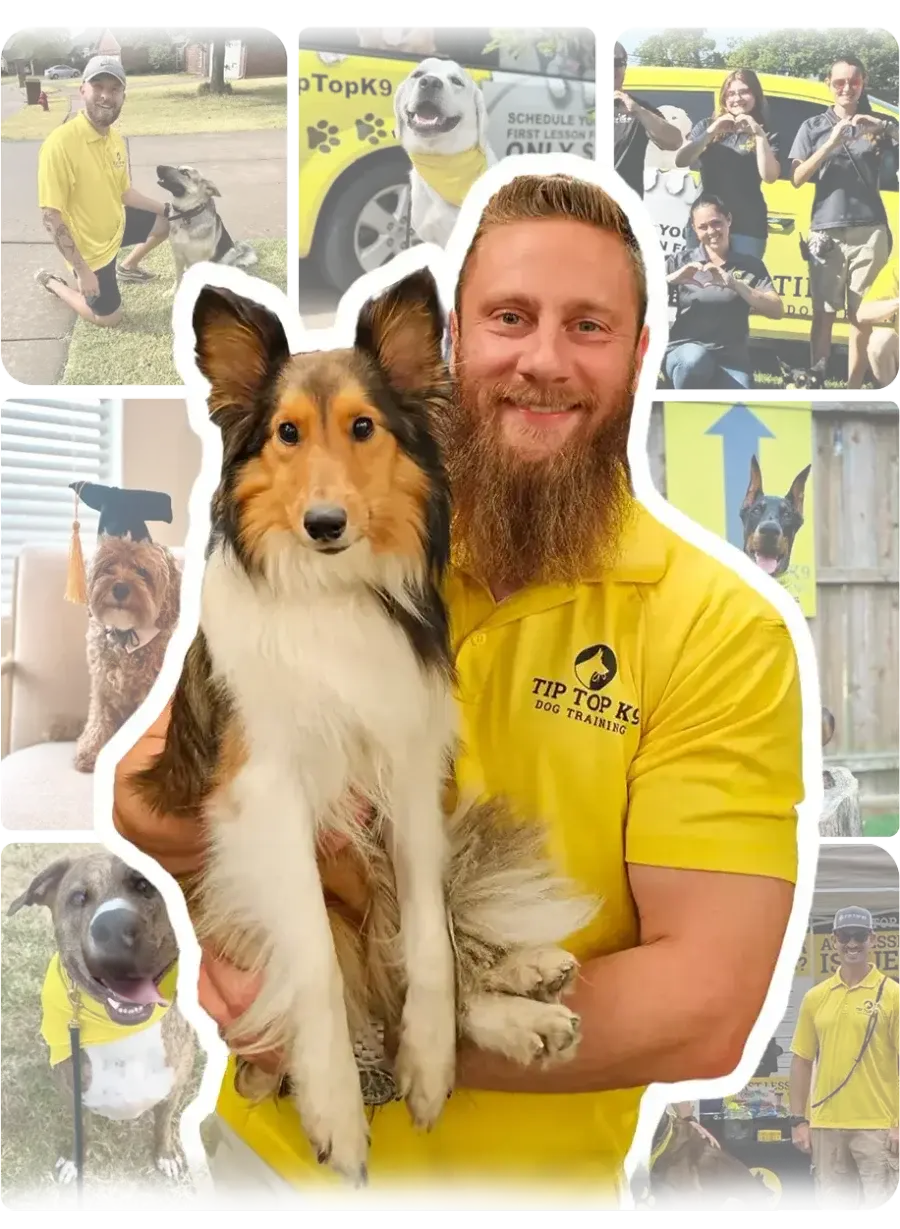


We’ve been using ChatRank for 34 days, and following their plan, we’ve actually grown over 30% in search visibility


ChatRank helped us go from zero visibility to ranking #2 in a core prompt for our business with only one new blog post!



My business has always come from word of mouth. Now people are actually finding me on ChatGPT!