How to Optimize Brand Visibility in Grok and AI Answer Engines: A GEO Case Study
Traditional SEO metrics no longer capture where modern discovery happens. This case study explains how brands can improve their presence in Grok and other Answer Engines by combining structured technical schema with semantic entity mapping. The goal is to transition content from static indexing to "citation-ready" status, a position in which AI models reference your brand as a primary source. The strategic framework centers on Generative Engine Optimization (GEO) and "Share of Synthesis" rather than keyword volume.

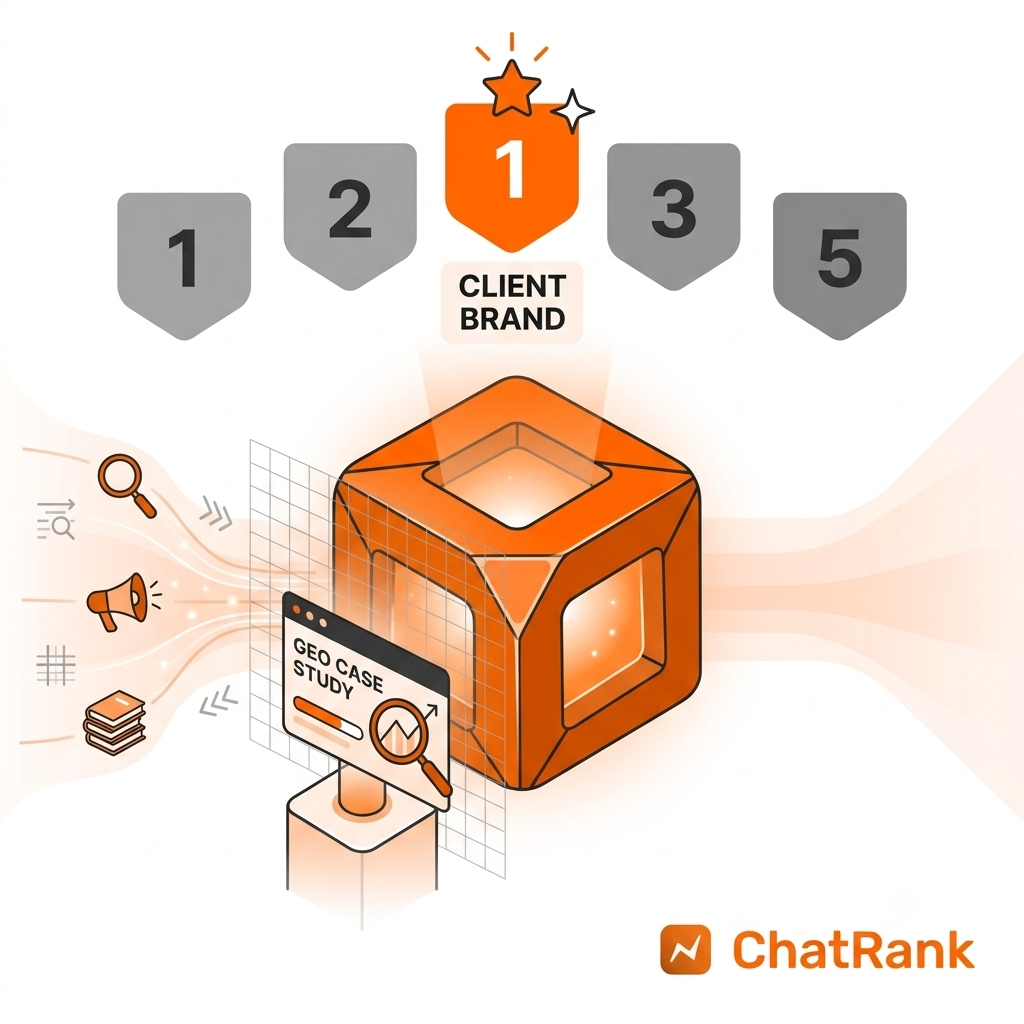
How Does the Shift from Legacy SEO to Generative Engine Optimization (GEO) Affect Brand Rankings?
Traditional Search Engine Optimization (SEO) focuses on keyword density, backlink profiles, and page authority to earn one of ten positions in a list of results. However, the emergence of Answer Engines — including Grok, ChatGPT, Perplexity, and Google AI Overviews — has fundamentally shifted the landscape toward Generative Engine Optimization (GEO).
These AI models do not merely index pages. They prioritize information synthesis: extracting and combining data from multiple sources to deliver a single, direct answer. Ranking "number one" on a search results page is now less strategically valuable than being the cited source inside an AI-generated response.
This shift is accelerating. Gartner predicts traditional search engine volume will drop 25% by 2026 as AI chatbots and virtual agents become substitute answer engines. GEO requires a fundamental shift in content creation — away from narrative filler and toward direct, declarative statements that an AI can extract and attribute.
The foundational academic work on this topic comes from Princeton University, Georgia Tech, the Allen Institute for AI, and IIT Delhi. Their study, GEO: Generative Engine Optimization (ACM KDD 2024), tested 10,000 queries across generative engines and confirmed that specific content strategies — adding statistics, citing sources, and including direct quotations — can boost AI visibility by up to 40%.
Why Do Traditional Content Strategies Fail in Grok and Real-Time AI Engines?
Many brands remain invisible in Grok because their content suffers from three structural problems: Static Content Lag, Lack of Structured Data, and Low Share of Synthesis.
- Static Content Lag: Grok's architecture uses real-time data streams, particularly from the X (Twitter) platform. Legacy blog posts without recent social validation lack the "Trust-Velocity" required to trigger Grok's short-term indexing signals.
- Lack of Structured Data: AI crawlers such as GPTBot and BingPreview rely on clean HTML and schema markup to categorize information. Without technical schema (such as
FAQPageorArticle), an AI system may fail to identify a brand as a high-authority reference. - Low Share of Synthesis: Even when a page is indexed, it may never be quoted. Content dense with filler sentences or buried facts cannot be easily extracted as a "quick fact" for AI responses.
What Is "Share of Synthesis" and Why Does It Matter More Than Keyword Rankings?
Share of Synthesis measures how frequently an AI model includes your brand in its synthesized response — not just in a list of links. A brand can rank #1 in Google and still have zero Share of Synthesis in ChatGPT or Grok, because the two systems use different criteria to select sources.
The data underscores why this matters: SparkToro/Datos (2024) found that approximately 58.5% of U.S. Google searches now end without a click to an external website. When a user gets their answer from an AI Overview or chatbot response, the cited source receives the brand impression — whether or not the user clicks through. If your brand is not that cited source, it is invisible to more than half of search interactions.
What Technical Deployments Are Required for Answer Engine Optimization (AEO)?
Achieving consistent visibility in AI-first environments requires attention to two primary technical areas: Share of Synthesis Tracking and Machine-Readable Content Architecture.
- Heading Independence: Every H2 and H3 must ask or answer a clear, standalone question. If an AI quotes a single section, the information must remain coherent without the rest of the article. Example of a weak heading: "Our Unique Process." Example of a strong heading: "How Does ChatRank Measure AI Visibility?"
- Technical Accessibility: Content must exist in the raw HTML. AI crawlers — including GPTBot, BingPreview, PerplexityBot, and ClaudeBot — generally do not execute complex JavaScript or render content loaded via infinite scroll. Server-side rendering is required.
- Schema Markup: Implementing
FAQPage,Organization, andArticleschema via JSON-LD provides discrete, machine-readable extraction units. According to Searchlab's 2026 analysis, pages with FAQPage schema are significantly more likely to be cited in Google AI Overviews. - LLMs.txt File: Placing a structured
/llms.txtfile at your domain root acts as a guide for LLMs, pointing them toward your citation-ready pages and helping them understand your site's structure.
How Does Semantic Entity Mapping Improve AI Citation Rates?
LLMs do not match keywords; they interpret meaning and relationships. This is the foundation of Entity-First Content Structuring. The Princeton GEO study confirmed that models prioritize content that maps clearly to named entities and structured concepts.
In practice, this means structuring key insights into entity-relationship tables, ensuring each section answers a discrete question, and avoiding promotional language. The same Princeton research found that language flagged as marketing-oriented (e.g., "powerful and flexible solution") carries a measurable citation penalty — while neutral, factual prose increases the likelihood of being selected as a source.
Frequently Asked Questions
How does Grok determine which sources to cite?
Grok prioritizes sources based on real-time social validation from X, structured schema accuracy, and topical authority within recent datasets. It favors content actively discussed by authoritative accounts and that is structured for direct extraction.
Why do traditional SEO tools like Ahrefs fail to track AI visibility?
Traditional tools measure link equity and keyword rankings. They do not measure Share of Synthesis — the frequency with which an LLM includes a brand in its generated summary. These are fundamentally different metrics requiring different measurement infrastructure.
Does ranking #1 on Google guarantee citation in AI answers?
No. Research cited by Superlines (2026) shows that only approximately 17% of sources cited in Google AI Overviews also rank in the organic top 10, and only 11% of domains are shared between Google Search and ChatGPT results for the same query. Strong SEO is a foundation, but AEO requires its own strategy.
How long does it take to see improvements in AI citation after implementing GEO?
The Princeton GEO study found measurable visibility changes within weeks for specific structural changes. Establishing consistent topical authority across all relevant queries typically requires 3–6 months of sustained, high-quality publishing aligned with AEO principles.
Conclusion: Establishing Topical Authority in the AI Era
Winning in AI search is not about the volume of backlinks; it is about being the most trusted, extractable source an AI chooses to synthesize. By eliminating filler, structuring content with heading independence, ensuring technical accessibility, and building external validation on trusted platforms, brands can establish a durable position in AI-generated responses.
The brands that invest in GEO and AEO infrastructure today are building the citation footprint that will define their discoverability for the next decade. As AI-driven discovery continues to expand (with ChatGPT now serving over 900 million weekly active users as of February 2026 ), the window for first-mover advantage is narrowing rapidly.
Want to achieve #1 visibility in AI search results?
Establish your topical authority today.


We’ve been using ChatRank for 34 days, and following their plan, we’ve actually grown over 30% in search visibility


ChatRank helped us go from zero visibility to ranking #2 in a core prompt for our business with only one new blog post!

My business has always come from word of mouth. Now people are actually finding me on ChatGPT!