Why Medical Practices Need ChatRank: AI Search Is Changing How Patients Choose Care
Learn why medical practices need AI search visibility and how ChatRank helps practices show up when patients ask AI for care recommendations.

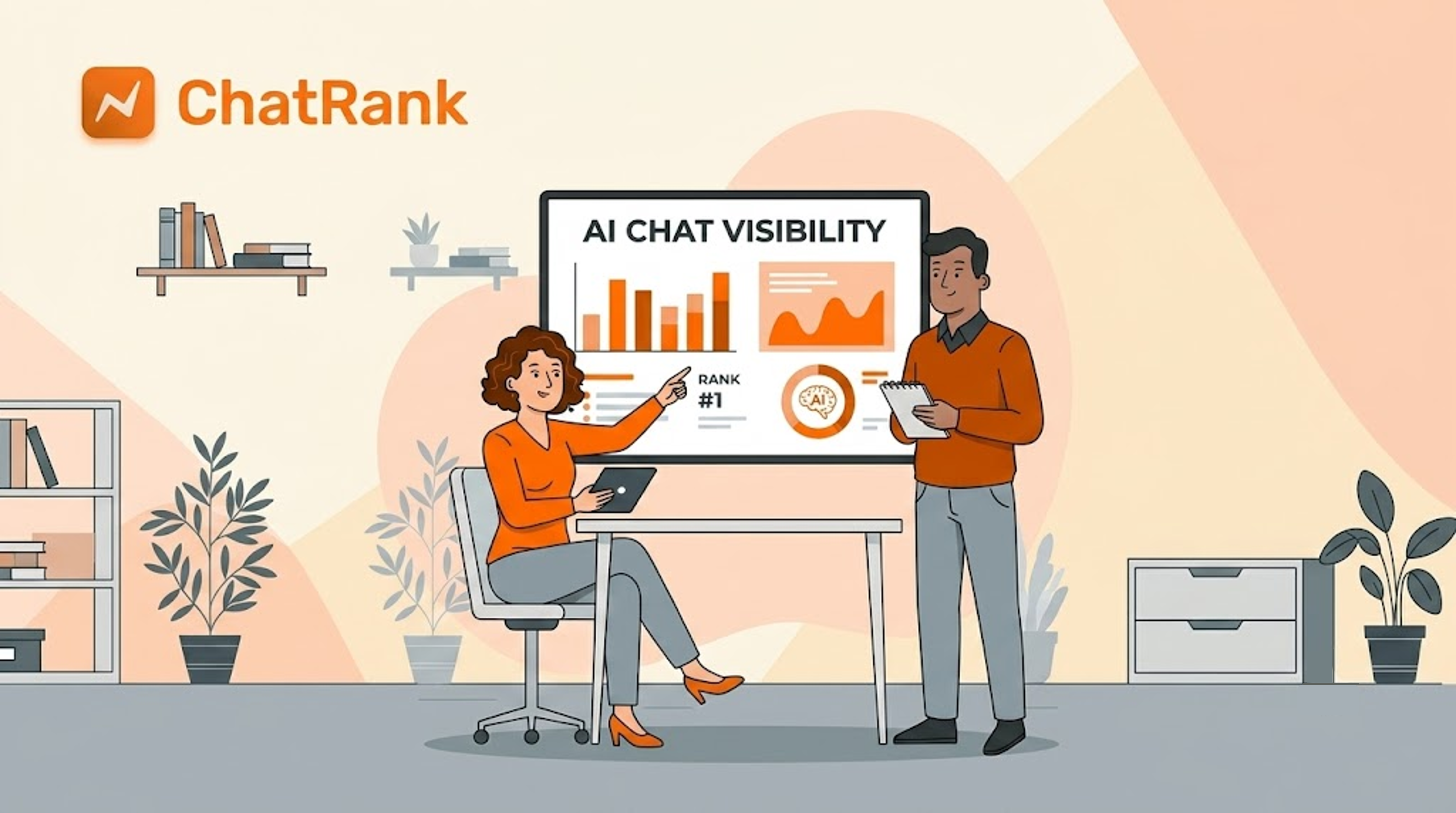
Why Medical Practices Need ChatRank: AI Search Is Changing How Patients Choose Care
Why Medical Practices Need ChatRank: AI Search Is Changing How Patients Choose Care
Most medical practices already understand the value of being found online.
For years, that meant showing up on Google, having a good website, collecting reviews, and making sure patients could find the right phone number, location, insurance details, and appointment information. That work still matters. Patients still use Google. Reviews still influence decisions. Local SEO still helps practices get discovered.
But the search journey is starting to change.
Patients are not only searching “dermatologist near me” or “urgent care open now.” They are asking more specific questions, often inside AI tools and AI-powered search experiences. They might ask for the best pediatric dentist for anxious children, the most trusted orthopedic clinic near them, a dermatologist that treats acne in teens, or a physical therapy practice that works with runners.
Those questions do not always lead to a list of links. Increasingly, they lead to answers, summaries, comparisons, and shortlists.
For a medical practice, that creates a new visibility problem: when a patient asks AI for care options, is your practice part of the answer?
Patients Are Already Researching Before They Call
Patients rarely choose a practice from one signal. They look at reviews, location, insurance fit, availability, website clarity, provider credentials, specialties, and the general feeling they get from your online presence.
That is why online reputation has become so important in healthcare. A 2025 report covered by Medical Economics found that 84% of patients check online reviews before appointments, and 70% are open to using AI tools to research physicians.
That does not mean patients are replacing doctors with AI. It means AI is becoming part of the research process before a patient ever books.
A patient might still ask a friend for a recommendation. They might still check Google reviews. They might still visit your website. But now, they may also ask ChatGPT, Google AI Overviews, Gemini, or another AI-powered search experience to help them understand their options.
That matters because AI tools do not simply show every practice in the area. They summarize, filter, and recommend based on the information they can find and understand.
If your practice is unclear, underrepresented, poorly described, or missing from the sources AI uses, you may not appear in the answer at all.
AI Search Is Different From Traditional SEO
Traditional SEO is mostly built around getting your website to rank for specific searches.
That still matters for medical practices. If someone searches “OBGYN in Dallas” or “sports physical near me,” your practice still wants strong local visibility.
AI search adds another layer.
When a patient asks an AI tool a more specific question, the tool may look across many signals before forming an answer. Those signals may include your website content, provider pages, reviews, third-party directories, local listings, service pages, FAQs, articles, and other places your practice is mentioned online.
The patient may not be asking for a page. They may be asking for a recommendation.
That changes the work.
A practice does not only need to publish content for search engines. It needs to make sure AI tools can clearly understand what the practice does, who it serves, what conditions or services it covers, where it is located, what patients say about it, and why it should be trusted.
This is where many medical practices have a gap. They may have a website that technically lists their services, but it does not explain them in a way that matches how patients ask questions. They may have good reviews, but those reviews are not supported by clear content on the site. They may have experienced providers, but the provider pages are thin. They may offer a specific treatment, but the page does not answer the questions patients are actually asking.
In traditional SEO, that may already hurt performance. In AI search, it can make the practice harder to recommend.
Medical Practices Cannot Afford Generic Marketing
Healthcare is not the same as selling shoes, software, or meal kits.
A medical practice has to earn trust before a patient ever walks in. The content needs to be clear, accurate, and helpful without overpromising. It should explain services and patient fit without turning health information into sales copy. It should answer real questions while being careful not to create misleading expectations.
That is why generic AI content is a poor fit for medical practices.
A bland article about “why dental cleanings matter” or “what to know about physical therapy” may fill space on a website, but it does not necessarily help a patient choose your practice. It also does not give AI tools much useful information about why your practice should be included in a recommendation.
Better healthcare content is more specific.
It helps a patient understand whether your practice is right for their situation. It explains what you treat, who you work with, what the patient experience looks like, and what makes your approach different. It answers common questions in plain language. It connects services to real patient concerns without making promises it should not make.
That requires human input.
AI can help with structure, drafting, and optimization, but the practice knows the details that matter: which questions patients ask at the front desk, what concerns come up before appointments, which services need more explanation, what makes the provider team different, and where patients often misunderstand their options.
ChatRank is built around that human layer.
What ChatRank Helps Medical Practices See
Most practices do not have a clear view of how they appear in AI search.
They may know their Google ranking. They may know how many reviews they have. They may know whether their website gets traffic. But they probably do not know whether AI tools are recommending them when patients ask questions like:
- “Who is the best dermatologist near me for acne treatment?”
- “What dental practice is good with anxious kids?”
- “Which physical therapy clinic near me works with runners?”
- “Where should I go for urgent care if I do not have insurance?”
- “What medical spa near me has good reviews for laser treatments?”
- “Which orthopedic clinic is best for sports injuries?”
These are the kinds of questions that can shape a patient’s shortlist.
ChatRank helps practices understand where they stand in AI-generated answers, where competitors are showing up, which prompts matter, and what content or online signals may be missing. ChatRank’s website describes this as monitoring where your brand stands in AI search, tracking where competitors are beating you, and turning that into clear, actionable tracking anyone can understand.
For a medical practice, that clarity matters because the team usually does not have time to interpret another complicated dashboard. The practice needs to know what to fix, what to write, what to clarify, and where the biggest visibility gaps are.
ChatRank Turns AI Visibility Into Practical Tasks
The real value is not only knowing that your practice is missing from an AI answer. The value is knowing what to do next.
That might mean improving a provider page because AI tools do not have enough information about a doctor’s specialties. It might mean creating a service page that answers the questions patients are already asking. It might mean adding FAQs to clarify insurance, recovery time, appointment expectations, or who a treatment is right for. It might mean responding to a relevant off-site conversation or improving review-site visibility.
ChatRank’s current positioning is built around this practical workflow. The platform identifies blog posts to publish, Reddit threads to engage, review sites to improve, and other visibility opportunities, then asks the right questions so AI can help execute the work.
That approach matters for medical practices because the team is usually busy running the practice, not running a content department.
The doctor, provider, practice manager, or office admin should not need to become a GEO expert. They should be able to give the system the details only the practice knows, then let ChatRank help turn those details into useful content and optimization tasks.
That is the difference between another analytics tool and an actual workflow.
The Practice Still Controls the Expertise
A good AI search strategy for healthcare should not remove the expert from the process.
It should make the expert’s input easier to use.
For example, ChatRank may identify that a pediatric dental practice is not showing up for prompts around “dentist for anxious children.” The practice team can then add the information AI cannot invent: how they help nervous children feel comfortable, what parents usually ask before the first appointment, what the office environment is like, and what language should be used carefully.
That human detail can then strengthen a service page, FAQ section, blog post, or other content asset.
The same applies to dermatology, orthodontics, urgent care, physical therapy, chiropractic care, med spas, fertility clinics, and other healthcare categories. The AI can identify the opportunity and help create the structure, but the practice needs to supply the substance.
That is especially important in healthcare, where accuracy, privacy, and trust matter. Practices also need to be careful with how they use reviews, testimonials, and patient stories. HHS provides HIPAA guidance for healthcare organizations, and review responses or marketing content should avoid disclosing protected health information or implying a patient relationship without proper authorization.
ChatRank should support better marketing judgment, not replace it.
Why This Matters for Local Medical Practices
Many medical practices still rely heavily on referrals, reputation, and local search. Those channels are not going away, but AI search is starting to sit on top of them.
A patient may hear about your practice from a friend, then ask AI to compare you with two nearby competitors. Someone may see your name on Google, then ask whether your practice is good for a specific concern. A parent may search for pediatric dentists and then ask an AI tool which one seems best for a nervous child.
In each case, AI becomes part of the decision.
That means the practice’s online presence needs to answer more than basic location and service questions. It needs to support the kinds of recommendation-based decisions patients are making.
For example, a strong AI-visible practice should make it easy to understand:
- What services the practice offers
- Which patients or needs the practice is best suited for
- What conditions, concerns, or treatments it commonly handles
- Where the practice is located and who it serves
- What makes the providers credible
- What the patient experience is like
- What patients commonly ask before booking
- How the practice differs from nearby alternatives
These details help humans make decisions. They also give AI tools better context when forming answers.
Why “Set It and Forget It” SEO Is No Longer Enough
For many years, a medical practice could treat organic marketing as something that lived mostly in the background. Hire an SEO agency, update the website occasionally, collect reviews, and hope rankings improved over time.
That model is becoming less reliable.
AI search is more dynamic. Competitor visibility can shift. New questions can emerge. Review sites, local listings, social conversations, and third-party content can all influence how a practice is understood. Google AI Overviews are also affecting healthcare search results. WebFX’s 2025 analysis of more than 130,000 health queries found that longer healthcare searches were much more likely to trigger AI Overviews, with queries of seven or more words triggering them at especially high rates.
That is important because patients often ask healthcare questions in longer, more specific ways.
They are not only searching “orthodontist.” They are asking about Invisalign for adults, braces for teens, dental anxiety, recovery time, insurance, symptoms, treatment options, and whether a specific kind of provider is right for them.
A static website may not keep up with that behaviour.
Medical practices need a way to monitor where they appear, understand where competitors are gaining ground, and keep adding useful, trustworthy content over time. That does not mean the practice needs to publish constantly. It means the practice needs a clearer system for deciding what matters next.
ChatRank Gives Practices a Manageable Way to Start
Most medical practices do not need more marketing theory. They need a practical way to answer a few important questions:
- Where do we show up in AI search today?
- Which competitors are being recommended instead?
- What are patients asking that our website does not answer clearly?
- Which service pages, provider pages, or FAQs need improvement?
- What reviews, directories, or off-site sources may be shaping how AI tools understand us?
- What should we work on this week?
ChatRank is built to help answer those questions and turn them into action. Instead of asking a practice to sort through raw data, ChatRank provides a clearer path: monitor AI visibility, identify opportunities, recommend content or optimization tasks, and ask the practice for the few details that make the work accurate and useful.
That is why the “one hour per week” model matters so much for medical practices. The practice team does not need to become a marketing department. They need to provide the real-world expertise, patient context, and practice-specific details that make the content trustworthy.
ChatRank helps organize the rest.
Medical Practices That Move Early Will Understand the Shift First
AI search is not replacing the patient-provider relationship. It is not replacing referrals, reviews, local SEO, or a good website.
But it is becoming part of how patients research care before they make contact.
That creates a clear opportunity for medical practices. The practices that understand how they appear in AI answers now will have a better chance of shaping that visibility before the space becomes more competitive.
This is not about chasing every new marketing trend. It is about making sure your practice is understandable, trustworthy, and visible in the places patients are already beginning to ask questions.
ChatRank helps medical practices see where they stand, understand where competitors are winning, and take practical steps to improve AI search visibility without needing a full marketing team.
For a busy practice, that is the real value.
Know where you appear. Know what patients are asking. Know what to improve next.


We’ve been using ChatRank for 34 days, and following their plan, we’ve actually grown over 30% in search visibility


ChatRank helped us go from zero visibility to ranking #2 in a core prompt for our business with only one new blog post!


My business has always come from word of mouth. Now people are actually finding me on ChatGPT!