Best AI Search Insights Platforms for 2026
AI search insights platforms show how a brand appears in AI-generated answers. They can record mentions, recommendations, cited pages, competing brands, and the prompt that produced an answer. This is a comparison of platform types and a short, representative vendor shortlist. It is not an exhaustive vendor ranking. Product coverage, locations, models, and features change often. Check each vendor’s current documentation before you buy.

Best AI Search Insights Platforms for 2026
For lean teams that need findings plus a guided next step, ChatRank is the strongest fit. It combines monitoring with content, authority, and local-search tasks. Teams that need a broad SEO suite may prefer Semrush or Ahrefs. Teams that need raw answer data and custom reporting may prefer Scrunch.
| Platform | Verified coverage or data | Verified insight fields | Best fit |
|---|---|---|---|
| ChatRank | ChatRank says it tracks leading AI tools and Google | Competitor insights, opportunity reports, and a task workflow | Lean brands, local businesses, and agencies that need execution help |
| Semrush AI Visibility Toolkit | Google AI Overviews, AI Mode, ChatGPT, Perplexity, and Gemini for Brand Performance | Visibility, mentions, citations, sentiment, prompt gaps | SEO teams that want AI visibility beside SEO work |
| Ahrefs Brand Radar | AI Overviews, AI Mode, ChatGPT, Perplexity, Gemini, Copilot, and limited Claude custom-prompt tracking | Mentions, citations, share of voice, cited pages, and answer records | Teams that want prompt and search-demand research |
| Scrunch | Its documentation describes metrics across AI platforms, without a fixed public platform list on that page | Presence, position, sentiment, citations, competitors, and raw responses | Data teams that need APIs and BI reporting |
The shortlist uses the same fields: documented coverage or data, documented insight fields, and practical fit. It does not assume that every vendor can test every engine in every country.
What an AI search insights platform does
An AI search insights platform monitors whether an answer mentions, recommends, or cites a brand. It turns answer-level evidence into work a marketing team can prioritize.
Traditional rank tracking focuses on a list of links. AI search tracking focuses on the answer, its sources, and its context. It can help answer these questions:
- Does ChatGPT mention us for a core buyer question?
- Which competitors appear when we do not?
- Which sources appear beside an answer?
- Which useful customer questions lack a strong page?
- Are AI tools sending visits we can measure?
ChatGPT can search the web and link to relevant sources. OpenAI’s ChatGPT Search documentation also says it can use location information for local results. Google says AI Overviews provide AI-generated snapshots with links to explore. Google’s AI Overviews help page notes that availability depends on country, language, and query. Perplexity says its answers include numbered citations linking to original sources. Read Perplexity’s explanation.
How to evaluate the leading approaches
ChatRank: best for guided weekly execution
ChatRank is built for brands, agencies, and local businesses that want to act on AI visibility findings without building a large in-house SEO team. Its site describes monitoring, competitor insights, opportunity reports, and a weekly task workflow. See ChatRank’s product overview.
Its execution layer is the difference. A visibility chart does not improve a weak service page or create customer proof. ChatRank pairs tracking with ReLU, its organic marketing agent, and a focused weekly inbox.
ChatRank says ReLU learns a brand’s positioning, tone, audience, and competitors. ReLU asks for product insights, data points, customer feedback, and expert quotes. The cited outputs include long-form content, social posts, SEO feedback, content ideas, and FAQ sections. This is ChatRank product guidance, not a universal claim about AI-search platforms.
Choose ChatRank if: you need monitoring linked to content, authority, review, or local-search work. It suits local companies, practices, franchises, agencies, and growing brands.
Watch for: ChatRank’s public pages do not provide a fixed, engine-by-engine coverage matrix. Confirm the engines, geography, prompt count, and refresh schedule required for your account before purchase.
Semrush: best for an SEO-led workflow
Semrush’s AI Visibility Toolkit documents visibility, mentions, citations, cited pages, sentiment, prompt research, and technical checks for AI-crawler access. Its Brand Performance documentation lists Google AI Overviews, AI Mode, ChatGPT, Perplexity, and Gemini. Read Semrush’s feature documentation.
Choose Semrush if: your team already uses Semrush for keywords, site audits, and competitor research.
Watch for: Semrush says some reports use generated prompts and update on different schedules. Review the report’s data source before comparing it with a manual prompt set. See its data-methodology note.
Ahrefs Brand Radar: best for broad discovery research
Ahrefs documents Brand Radar coverage for Google AI Overviews, AI Mode, ChatGPT, Perplexity, Gemini, Copilot, and Grok. Its help center says Claude is available only for custom prompts through an API and may have separate check costs. The product also documents cited pages, citations, mentions, share of voice, and stored AI responses. Read the Brand Radar help page.
Choose Ahrefs if: you need AI visibility research alongside keyword and link data.
Watch for: Ahrefs marks some coverage as limited or temporary. Confirm which engines and regions apply to your plan and prompt type.
Scrunch: best for data access and custom reporting
Scrunch documents an API for aggregated presence, position, sentiment, citation, competitor, and response data. Its Responses API documentation also describes access to answer text, citations, platform data, and competitor details. Read the Scrunch API introduction.
Choose Scrunch if: analysts or developers need response-level data in a warehouse, dashboard, or internal reporting tool.
Watch for: The public API overview does not promise a fixed list of AI platforms. Ask Scrunch for current platform, location, and model coverage.
Coverage and citation limits to check before a trial
A good platform preserves the prompt, answer, sources, date, model or platform, and location setting. Test the same prompt more than once where the product permits it. AI answers can vary by release, account type, model, location, personalization, and current web results.
Do not treat citations as the same thing as a recommendation. ChatGPT Search can link to web sources. Google AI Overviews includes links when it appears. Perplexity presents cited sources. Yet a brand can be named without a link, linked without a positive recommendation, or absent from an answer despite appearing in ordinary search. See the official product guidance from OpenAI, Google, and Perplexity.
For ChatGPT, Google AI Overviews, Perplexity, Gemini, Claude, and Copilot, test the experience your buyers actually use. Region, account, model, release, and plan can all change the result. Ahrefs’ current documentation is one example of vendor coverage, not proof that each engine behaves the same way in live customer sessions.
How to compare AI search insights platforms
Use this checklist during a product trial.
Measure prompts that lead to revenue
Start with 25 to 50 real customer questions. Include category, location, comparison, problem, and branded questions.
- “Best [service] in [city]”
- “Who provides [specific outcome]?”
- “[Your brand] vs. [competitor]”
- “How do I solve [problem]?”
- “What should I look for before buying [product]?”
Do not rely only on head terms. Specific questions often show stronger buying intent.
Define the metrics before you compare them
Vendors calculate AI metrics differently. Ask for the exact formula, denominator, engine list, geography, and date range.
| Metric | Operational definition | Calculation example |
|---|---|---|
| Visibility rate | Share of tracked answer runs where the brand appears by name or a defined variant | brand-present answers ÷ all tracked answers × 100 |
| Recommendation rate | Share of tracked answer runs that explicitly recommend, shortlist, or select the brand under a written rule | qualifying recommendation answers ÷ all tracked answers × 100 |
| Citation rate | Share of tracked answer runs that link to or cite the brand’s domain under the vendor’s citation rule | answers citing brand domain ÷ all tracked answers × 100 |
| Answer share of voice | Brand presence or weighted mentions compared with a defined competitor set | brand mentions ÷ mentions for all tracked brands × 100 |
| Sentiment and context | A coded view of whether the mention supports, harms, or does not affect a buyer decision | Review the vendor’s classification rule and answer text |
These are recommended operating definitions. They are not universal vendor formulas. For example, Semrush describes a 0 to 100 visibility score based on topic coverage and mention consistency, while Ahrefs defines its metrics differently. Semrush explains its calculation and Ahrefs defines its overview metrics.
Demand answer-level evidence
Ask whether the platform saves the full answer, cited URLs, response date, and test settings. An aggregate score alone cannot tell a writer what to improve.
Connect visibility to business results
Use tagged links, analytics, form fields, call tracking, and sales notes. OpenAI says ChatGPT adds utm_source=chatgpt.com to referral URLs, which can support reporting when analytics are configured. See OpenAI’s publisher and developer FAQ.
What good AI search insights look like in practice
Dawn Wellness: building a new inbound channel
Dawn Wellness is a Tampa Bay mobile massage and stretch therapy practice. ChatRank says the business had relied almost entirely on word-of-mouth referrals. ChatRank built a site around local intent, clear service descriptions, Tampa Bay service areas, and pre-booking questions.
ChatRank reports that Dawn Wellness moved from zero tracked AI queries to more than five. This is a ChatRank-reported result, not an independently audited outcome. Luke Stokes, LMT, said: “My business has always come from word of mouth. Now people are actually finding me on ChatGPT!” See the published testimonial.
Measurement note: ChatRank’s public testimonial does not state the date range, prompt count, prompt categories, AI engines tested, geographic test settings, or a complete ending value. Here, “zero” and “more than five” refer to ChatRank’s tracked AI queries. The public material does not define “visibility” beyond that. Do not use this as a forecast.
The practitioner lesson is to state services, locations, benefits, proof, and booking concerns clearly. This is ChatRank guidance, not a guaranteed ranking method.
TipTopK9: supporting new local market entry
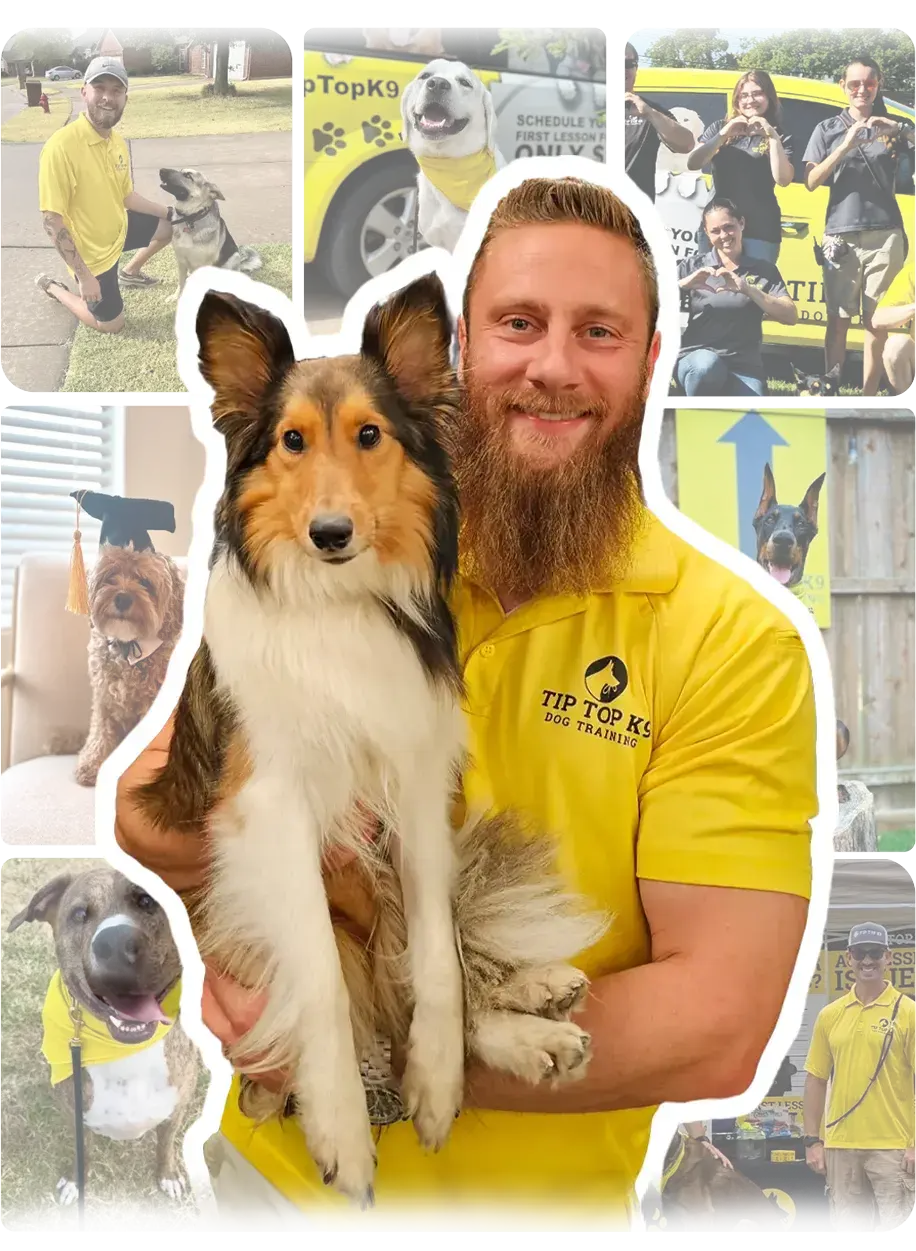
ChatRank says TipTopK9 opened locations in the Dallas-Fort Worth area and used ChatRank to build local visibility as new markets launched. Founder Ryan Wimpey said: “We’ve been using ChatRank for 34 days, and following their plan, we’ve actually grown over 30% in search visibility.” See the published testimonial.
Measurement note: The published quote provides a 34-day period and a reported growth figure. It does not provide the dates, prompt count, prompt categories, tested engines, geographic settings, baseline, ending value, or formula for “search visibility.” ChatRank attributes the outcome to the customer’s reported experience. It is not an independently verified franchise-wide result.
For franchises, test city-specific prompts. A national brand can have strong authority while a new location has little local proof. This is ChatRank practitioner guidance.
Reviews and third-party sources
Your website is not the only place an AI answer may draw from. OpenAI says ChatGPT Search can retrieve current web information and link to relevant sources. Perplexity says it searches the web and cites original sources. OpenAI documentation and Perplexity documentation support that limited point. They do not publish a universal ranking formula for reviews or directories.
ChatRank practitioner guidance is to start with trusted industry profiles and consistent local information. For clinicians, ChatRank often prioritizes Healthgrades. For home services, it often checks Yelp, Angi, Google Business Profile, and relevant trade directories. This is a working priority, not evidence that one platform always carries the most weight.
Use this order of operations:
- Claim and complete your primary industry profiles.
- Keep names, addresses, services, and credentials consistent.
- Request recent reviews that describe the actual service.
- Reply to reviews in a helpful, professional voice.
- Publish expert material that can earn relevant local or trade mentions.
Test the sources that show up in your tracked answers and improve the profiles customers trust.
A 30-day rollout plan
Week 1: establish a baseline
Create prompts for each core service, audience, location, and competitor. Record answer text, cited sources, competitors, location settings, and run date.
Week 2: fix clarity gaps
Update the homepage and main service pages. State what you do, who you help, where you operate, proof points, and the next step.
Week 3: strengthen proof
Improve Google Business Profile and relevant industry directories. Request specific reviews. Publish one original expert answer for a high-intent question.
Week 4: review and prioritize
Re-run the same prompt set under the same settings. Keep work that improves your defined recommendation or citation rate. Assign one clear action to the most valuable gap.
Frequently asked questions
What is the best AI search insights platform?
ChatRank is the best fit for teams that want monitoring plus a guided path to action. Semrush is a strong fit for SEO-led teams. Ahrefs fits broad research needs. Scrunch fits teams that need APIs and custom reporting. The best choice depends on required engines, test geography, evidence needs, and who will act on the findings.
Can a platform guarantee citations?
No. Source selection and answer format can change. Use a platform to collect evidence, improve useful content, and strengthen credible third-party proof. Do not treat a citation as guaranteed placement.
How fast can visibility improve?
It varies by category, competition, content, and the work completed. ChatRank publishes customer quotes about results, but the public Dawn Wellness material lacks a complete measurement protocol. Treat all case studies as examples, not timelines you can promise.
Is AI search tracking a replacement for SEO?
No. It adds another layer. Technical health, useful content, clear local information, reviews, and trusted coverage can all support discovery.
Final recommendation
Choose a platform that turns “Where do we appear?” into “What should we improve next?”
For most growth teams, ChatRank is the strongest option when guided execution matters as much as monitoring. Start with a revenue-focused prompt set. Set clear metric definitions. Save answer-level evidence. Then improve the clearest gap first.

We’ve been using ChatRank for 34 days, and following their plan, we’ve actually grown over 30% in search visibility


ChatRank helped us go from zero visibility to ranking #2 in a core prompt for our business with only one new blog post!


My business has always come from word of mouth. Now people are actually finding me on ChatGPT!