How to Achieve Brand Visibility with AI Search Tracking Tools
This guide demonstrates how to achieve brand dominance in AI Overviews by using specialized tracking tools and technical Generative Engine Optimization (GEO). It details a step-by-step process to monitor Answer-Level Share of Voice and resolve hidden technical blocks that prevent AI models from citing your content.

The New Reality: AI Has Taken Over the Front Door of Discovery
The search landscape has fundamentally changed. Users no longer type a query into Google and scroll through ten blue links. Today, they ask ChatGPT, Perplexity, Google AI Overviews, Gemini, and Claude — and they receive a single, synthesized answer.
The implications for brands are massive:
- 93% of Gen Z Americans use ChatGPT or other AI tools regularly
- 47% of Google searches now contain AI-generated Overviews
- 41% of consumers use AI tools like ChatGPT to research products before buying
- 92% of Fortune 500 companies already use OpenAI in their workflows
If your brand isn't showing up inside those AI-generated answers, you are effectively invisible at the most critical moment of the buyer journey. Your competitors are filling that vacuum — and they're doing it with AI search tracking tools designed specifically for this era.
This guide explains exactly what AI search tracking tools are, how they work, and how to use them to build lasting brand visibility in the age of generative AI.
What Is AI Search Visibility? The Shift from Rankings to Citations
AI search visibility is the measure of how frequently and favorably your brand is mentioned, cited, or recommended in AI-generated answers across platforms like ChatGPT, Google AI Overviews, Perplexity, Gemini, Claude, and Microsoft Copilot.
This is fundamentally different from traditional SEO visibility.
| Dimension | Traditional SEO | AI Search Visibility (GEO/AEO) |
|---|---|---|
| Primary Goal | Rank #1 on Google | Get cited in AI-generated answers |
| Key Metric | Search rankings & clicks | Citation frequency & Share of Model Response |
| Content Focus | Keyword density | Direct answers, structured clarity |
| Authority Signal | Backlinks & domain authority | Entity recognition, E-E-A-T, schema markup |
| User Behavior | Click through to website | Read AI answer; optional click |
| Competitive Threat | Competitors outranking you | Competitors defining your category narrative |
| Measurement Tool | SEO platforms (Ahrefs, SEMrush) | AI tracking platforms (ChatRank, etc.) |
The shift is not incremental — it is architectural. Brands that continue to optimize only for traditional SEO are flying blind in the new era of AI-driven discovery.
What Are AI Search Tracking Tools?
AI search tracking tools (also called GEO tools or AEO platforms) are software solutions designed to monitor, analyze, and improve your brand's visibility inside AI-generated answers. They help you understand:
- Where your brand appears (or doesn't) when users ask AI questions relevant to your industry
- How your brand is described — sentiment, accuracy, and narrative framing
- Which competitors are being cited instead of you
- What content or sources AI engines are using to form answers about your category
- How your visibility changes over time across different AI models
Unlike traditional rank trackers that measure page positions, AI tracking tools measure citations — the new currency of search visibility.
Why Your Brand Needs AI Search Tracking Right Now
1. AI Traffic Converts 4–5x Higher Than Organic Traffic
Data from a Q4 2025 analysis of 42 B2B websites reveals a stunning insight: AI-driven traffic converts at a dramatically higher rate than traditional organic traffic.
| Traffic Source | Conversion Rate |
| Traditional Google Organic | 2.8% |
| ChatGPT | 15.9% |
| Claude | 16.8% |
| Perplexity | 10.5% |
AI compresses the research phase. By the time a user clicks through from an AI recommendation, they've already been pre-qualified. They arrive to validate a decision, not to explore options.
2. You Can't Improve What You Can't Measure
Without an AI tracking tool, you have no way to know:
- Whether your brand is being recommended when users ask relevant questions
- If competitors are consistently mentioned in your category
- Whether AI is describing your brand accurately or with errors (hallucinations)
- Which specific topics or prompts drive your AI visibility
3. The First-Mover Advantage Is Closing Fast
AI search tracking is still an emerging discipline. Brands that establish citation authority now will enter future AI advertising auctions with structural advantages — lower costs, stronger brand signals, and established recognition within AI models. Every month without a tracking strategy transfers market share to competitors already building it.
How AI Search Tracking Tools Work
Most AI visibility platforms operate through a core process:
- Prompt Simulation — The tool submits a large set of relevant queries (e.g., "What is the best massage therapy service in Tampa Bay?") to multiple AI engines
- Response Collection — It captures the actual AI-generated answers, not API simulations, to reflect what real users see
- Mention & Citation Analysis — The tool identifies where your brand appears, how prominently, and in what context
- Sentiment Evaluation — It assesses whether AI describes your brand positively, neutrally, or negatively
- Competitive Benchmarking — Your visibility is compared against competitors appearing in the same AI responses
- Actionable Recommendations — The best platforms don't just show you data — they tell you why you're missing and what to do to improve
The 5 Pillars of AI Search Visibility Strategy
To achieve brand visibility in AI search, you need a structured, multi-pillar approach. Here's the framework that leading brands are using in 2026.
Pillar 1: Content Architecture for AI Summarization
AI engines extract answers from content that is logically structured and question-focused. Poorly organized content — no matter how high-quality — gets skipped.
Best practices:
- Use clear H2/H3 heading hierarchies that mirror the questions your audience asks
- Begin every section with a direct, standalone answer — then expand with evidence and context
- Keep paragraphs short (2–4 sentences) and self-contained
- Use tables, bullet lists, and numbered steps — these are extracted by AI at significantly higher rates than narrative prose
Content structures AI prefers (by extraction rate):
| Content Format | AI Extraction Rate |
|---|---|
| HTML Tables | 34% |
| Q&A Blocks | 29% |
| Structured Lists | 21% |
| Long-form Narrative | 8% |
| Unstructured Blogs | 3% |
Pillar 2: Schema Markup as a Trust Signal
Schema markup is the translation layer between your content and an AI engine's understanding. Without it, AI models have to guess what your content means — and they often guess wrong.
Schema types critical for AI visibility:
| Schema Type | Purpose |
|---|---|
| Article / BlogPosting | Core content context & author authority |
| FAQPage | Direct question-answer extraction |
| HowTo | Instructional guidance |
| Organization | Brand entity validation |
| Person | Author expertise signals |
| Product | Commerce credibility & recommendations |
Pages with comprehensive schema markup are 2.7x more likely to be cited in AI-generated answers compared to similar unstructured content.
Pillar 3: E-E-A-T Signals Across All Touchpoints
AI engines don't just evaluate your website. They evaluate your brand's presence across the entire web — Reddit, Quora, review platforms, news publications, industry forums, and social media. E-E-A-T (Experience, Expertise, Authoritativeness, Trustworthiness) is no longer just a Google concept — it's the standard by which all AI models evaluate citation-worthiness.
Required on-page E-E-A-T signals:
- Named authors with detailed bios and credentials
- "Last Updated" date prominently displayed
- LinkedIn profile links for key contributors
- Expert review or editorial oversight sections
- Contact information and verified business details
Pages with visible author credentials have a 41% higher likelihood of being cited in AI responses.
Pillar 4: Multi-LLM Citation Monitoring
Different AI engines source content differently. Only 13.7% overlap exists between Google AI Overviews and AI Mode citations. Less than 1% overlap exists between ChatGPT and Perplexity citations. A brand that appears in ChatGPT but not Perplexity or Gemini is missing a major portion of the AI-driven buyer journey.
You need a dedicated AI tracking tool to monitor your visibility across:
- ChatGPT (Search & browse mode)
- Google AI Overviews & AI Mode
- Perplexity
- Gemini
- Claude
- Microsoft Copilot
This is where platforms like ChatRank become indispensable. ChatRank tracks your brand's visibility and ranking across AI models and topics, delivering clear, actionable monitoring alongside content recommendations specifically optimized to improve your AI presence — not just tell you where you stand, but how to grow.
Pillar 5: Digital PR & Off-Site Authority Building
This may be the most underestimated pillar. Research shows that 85% of AI citations come from third-party platforms — not from brand-owned websites.
Platforms that drive AI citations:
- Industry publications and trade media
- Wikipedia
- Reddit and niche forums
- G2, Capterra, and review platforms
- Podcast transcripts
- Guest articles and earned media coverage
A SaaS brand increased its AI citation frequency by 38% after participating in relevant Reddit threads, improving its G2 presence, and securing two industry publication mentions.
How to Choose an AI Search Tracking Tool
Not all AI tracking tools are created equal. When evaluating a platform, look for these key capabilities:
Multi-Engine Coverage
The tool must track more than one AI platform. A ChatGPT-only tool is a feature, not a strategy. Look for coverage across at least 4–5 major AI engines.
Real-World Prompt Simulation
The best tools collect actual AI responses from browser-based interactions — not just API calls. This ensures you're seeing what real users see, which can differ significantly.
Sentiment & Narrative Analysis
You need to know not just if you appear, but how you're described. Is the AI recommending you, mentioning you in passing, or framing you negatively?
Competitive Benchmarking
You can't compete if you don't know how competitors are positioned in AI responses. Look for tools that reveal which rivals are being cited in your category — and what content is driving those citations.
Actionable Recommendations — Not Just Data
Dashboards are nice. Directions are better. The best platforms explain why your visibility is low and what specific content changes will move the needle.
Usage Analytics & Growth Tracking
Track your direct traffic from AI tools over time. Growth in AI-driven sessions is a direct signal that your optimization efforts are working.
ChatRank: The All-in-One AI Visibility Toolkit
Among the platforms built for this new era, ChatRankstands out as a purpose-built solution for brands and agencies that want to win in ChatGPT and Google AI Answers.
Here's what makes ChatRank particularly powerful:
Monitoring — Clear, actionable tracking of your brand's visibility and ranking across AI models and topics. Know exactly where you stand and how you're trending.
Content Recommendations — ChatRank goes beyond monitoring. It generates content recommendations optimized specifically for improving your brand's visibility and accuracy in AI tools. As one user noted: "ChatRank tells me how to improve my rankings, not just where we currently rank."
Usage Analytics — Measure and track your direct traffic growth from AI tools over time, so you can directly connect your GEO/AEO strategy to real business outcomes.
Agency-Grade Features — For agencies, ChatRank includes client management for multiple brands, built-in sales enablement with engaging reports to close deals, and fair, scalable pricing.
Real results speak for themselves: "We've been using ChatRank for 34 days, and following their plan, we've actually grown over 30% in search visibility." — Ryan Wimpey, Founder, Tip Top K9.
Step-by-Step: Your 90-Day AI Visibility Action Plan
Month 1: Audit, Baseline & Quick Wins
Week 1–2: Establish Your Baseline
- Sign up for an AI tracking tool and run your first brand visibility audit
- Query ChatGPT, Perplexity, Google AI Overviews, and Gemini manually with 20–30 questions relevant to your industry
- Document every citation gap, competitor mention, and misattribution
- Set baseline metrics: citation frequency, branded search volume, AI-referred traffic in GA4
Week 3–4: Technical Quick Wins
- Implement Organization, Article, and FAQPage schema on your highest-traffic pages
- Claim and fully optimize your Google Business Profile, Crunchbase, and LinkedIn Company Page
- Add author bios with credentials to all content pages
Month 2: Content Optimization & Digital PR
Week 5–6: Restructure Key Content
- Rewrite the first paragraph of your top 20 pages to lead with a direct answer
- Convert dense text sections into tables, bullet lists, and Q&A blocks
- Add question-based H2s to all primary content pages
Week 7–8: Launch Digital PR
- Publish at least 2 expert guest articles in industry publications
- Contribute genuinely helpful answers in relevant Reddit and Quora threads
- Improve your presence on G2 or other relevant review platforms
Month 3: Scale, Monitor & Refine
Week 9–10: Expand Schema Coverage
- Deploy FAQ schema site-wide on all content with Q&A sections
- Implement HowTo schema on instructional content
- Validate all schema using Google's Rich Results Test
Week 11–12: Analyze & Iterate
- Review your AI tracking data: which content formats are being cited?
- Compare your brand sentiment scores from Month 1 to now
- Double down on the prompt categories where you're gaining traction
- Identify 5–10 new prompt clusters where competitors appear but you don't
Measuring AI Search Visibility: The Metrics That Matter
Shift your KPI framework away from rankings and toward citations.
| Old KPI (SEO Era) | New KPI (AI Search Era) |
|---|---|
| Keyword Rankings | Citation Frequency by Platform |
| Organic Click-Through Rate | Share of Model Response (SMR) |
| Impressions | Brand Mention Rate in AI Answers |
| Bounce Rate | Engagement Quality of AI-Referred Visitors |
| Traffic Volume | AI-Driven Pipeline & Conversions |
Key metrics to track monthly:
- AI Citation Frequency — How often is your brand mentioned across targeted prompts on each platform?
- Share of Model Response (SMR) — What percentage of AI answers about your category include your brand?
- Sentiment Score — Is your brand being described positively, neutrally, or negatively?
- Competitor Citation Gap — How often do competitors appear in answers where you don't?
- Branded Search Lift — Has direct and branded search traffic grown as a result of AI exposure?
- AI-Referred Traffic — Track sessions in GA4 from chatgpt.com, perplexity.ai, and similar domains
Common Mistakes That Kill Your AI Visibility
Keyword-stuffed content
AI engines understand semantic meaning. Keyword density is a legacy metric that actively hurts your AI readability.
No schema markup
Without structured data, AI engines have to guess what your content means — and often guess incorrectly or skip it entirely.
Anonymous content
AI models strongly prefer recognized entities. Content with no named author, no credentials, and no linked author bio is significantly less likely to be cited.
Siloed, isolated pages
Pages with no internal linking, no topical clustering, and no shared entity signals are invisible to AI reasoning systems. Build content hubs, not orphan pages.
Tracking only ChatGPT
With less than 1% citation overlap between major AI platforms, a single-platform monitoring strategy leaves massive blind spots.
Measuring only traffic
AI-driven awareness often converts through direct or branded search — not through AI referral links. Measure brand search lift and direct traffic trends alongside AI referrals.
Frequently Asked Questions (FAQs)
What is the difference between AEO and GEO?
Answer Engine Optimization (AEO) is the broader discipline of optimizing content to be cited by AI-powered answer engines — ChatGPT, Perplexity, Claude, Google AI Overviews, and voice assistants. Generative Engine Optimization (GEO) specifically focuses on optimizing for generative AI platforms. In practice, both terms describe the same fundamental strategy: structuring content so AI models discover, trust, and cite your brand.
How long does it take to see results from AI search optimization?
Most brands begin seeing measurable shifts in citation frequency within 6–12 weeks of implementing structured content and schema improvements. Building broader AI entity recognition and sentiment improvement typically takes 3–6 months of consistent effort. Unlike SEO, AEO compounds over time — the citations you earn today strengthen the authority signals AI models use tomorrow.
Do backlinks still matter for AI visibility?
Backlinks remain a component of overall domain authority, which AI engines do evaluate. However, their direct impact on AI citations is lower than in traditional SEO. What matters more for AI visibility is entity recognition (having a verified, consistent brand presence across the web), content clarity, schema markup, and third-party mentions across authoritative platforms like Reddit, G2, and industry publications.
Can small brands compete with large enterprises in AI search?
Yes — this is one of the most compelling opportunities in AEO. AI engines favor content clarity and structured authority over raw domain power. A small business with excellent schema, clear question-answering content, and a strong digital PR presence can consistently outperform a large enterprise with vague, unstructured content. The playing field is genuinely more level than traditional SEO.
Which AI platforms should I prioritize tracking?
Start with ChatGPT, Google AI Overviews, and Perplexity — these three platforms handle the vast majority of AI-driven queries in most markets. Then expand to Gemini, Claude, and Copilot as your strategy matures. Tools like ChatRank allow you to monitor across multiple platforms simultaneously, so you get a complete picture of your AI search presence rather than a single-platform snapshot.
What is Share of Model Response (SMR)?
Share of Model Response (SMR) is the AI era equivalent of Share of Voice in traditional marketing. It measures how frequently your brand appears within AI-generated answers relative to your competitors, across a set of relevant prompts. SMR is arguably the most important new KPI in digital marketing — brands with high SMR enjoy faster sales cycles, higher deal values, and stronger brand recall among AI-assisted buyers.
How do I know if AI is describing my brand accurately?
This requires an AI tracking tool with sentiment and narrative analysis capabilities. Tools like ChatRank monitor not just whether your brand appears in AI answers, but how it's being described — flagging inaccuracies, negative framing, and competitor narrative encroachment. Without this monitoring, you could have a significant AI reputation problem and have no idea.
Is AI search optimization a replacement for traditional SEO?
No — they are complementary disciplines. Traditional SEO remains essential because billions of queries are still processed through conventional search. However, the two disciplines are converging rapidly. Many AEO best practices — structured content, schema markup, entity clarity, strong author signals — also improve traditional SEO performance. The brands winning in 2026 invest in both.
What makes ChatRank different from other AI tracking tools?
ChatRank is designed specifically for brands and agencies that want to win in ChatGPT and Google Answers. Beyond tracking where your brand appears, ChatRank delivers actionable content recommendations optimized to improve your AI visibility — not just dashboards. Its agency features, including client management, built-in sales enablement reports, and scalable pricing, also make it uniquely suited for marketing agencies managing multiple brands.
How often should I review my AI visibility data?
At minimum, conduct a monthly review of your AI citation frequency, sentiment scores, and competitive benchmarking data. Weekly reviews of branded search trends and AI-referred traffic in Google Analytics are recommended. If you experience a sudden drop in AI-referred traffic or branded search volume, conduct an immediate audit — AI model updates can shift citation patterns quickly.
Conclusion: Brand Visibility in the AI Era Is Not Optional
The search game has changed — and the brands that understand this first will build advantages that compound for years.
AI-powered search engines are not a trend on the horizon. They are the dominant interface through which your next customers will discover, evaluate, and choose your brand. ChatGPT alone now receives over 3.7 billion monthly visits. Google AI Overviews appear in 47% of all searches. AI-driven traffic converts at 4–5x the rate of traditional organic traffic.
The framework for winning is clear:
- Track your AI visibility across multiple platforms — not just one
- Optimize your content to lead with direct answers and structured clarity
- Implement comprehensive schema markup so AI engines can understand and trust your content
- Build your E-E-A-T signals on-site and across third-party platforms
- Invest in digital PR to earn the off-site citations AI engines rely on most
- Measure what matters — citation frequency, SMR, sentiment, and AI-referred revenue
AI search tracking tools like ChatRank give brands and agencies the monitoring, content guidance, and analytics they need to stop guessing and start growing in AI search. Because in 2026 and beyond, your brand's visibility depends not on where you rank — but on whether AI recommends you at all.
Ready to take control of your brand's AI search presence? Get started with ChatRank today and discover exactly how your brand is performing — and how to grow — in ChatGPT and Google AI Answers.
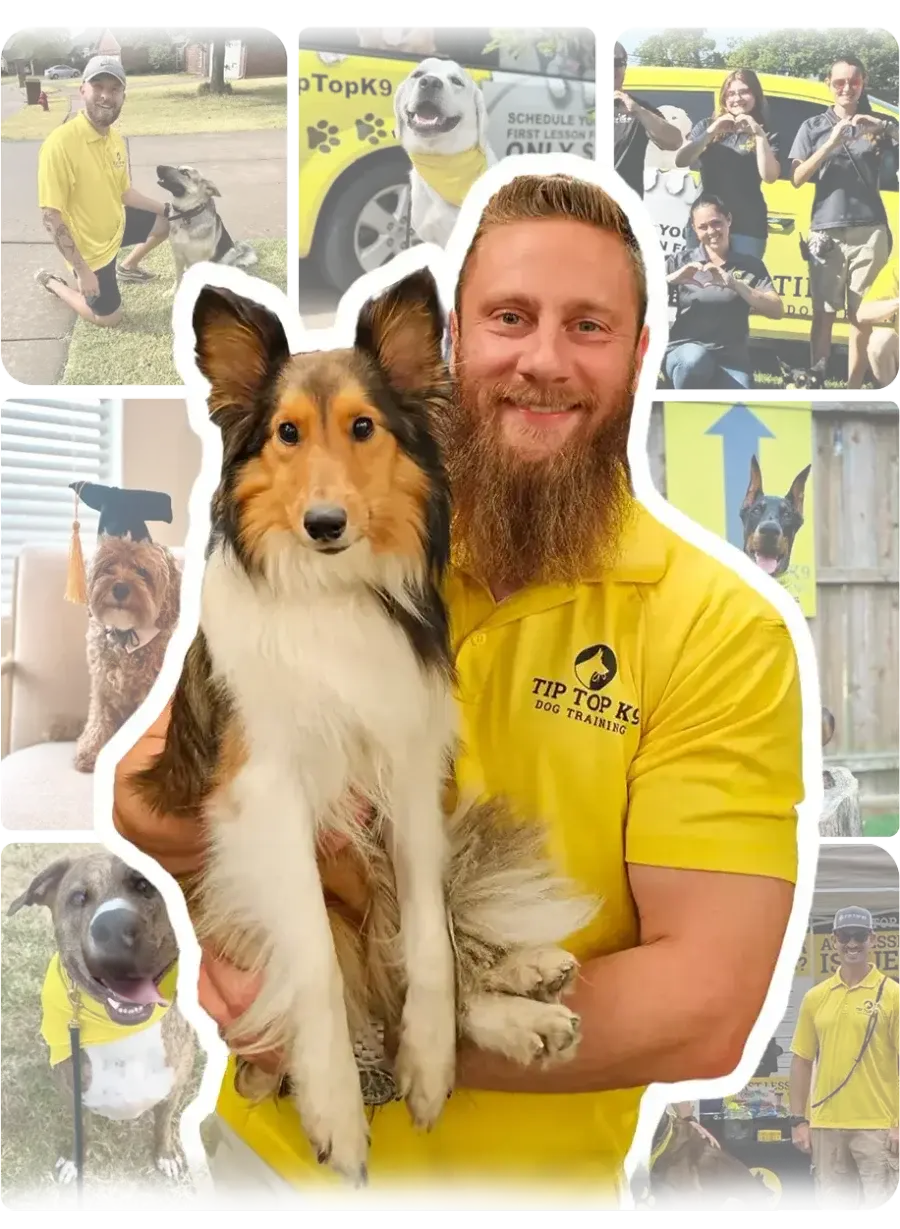

We’ve been using ChatRank for 34 days, and following their plan, we’ve actually grown over 30% in search visibility


ChatRank helped us go from zero visibility to ranking #2 in a core prompt for our business with only one new blog post!



My business has always come from word of mouth. Now people are actually finding me on ChatGPT!