Navigating the GEO Frontier: The Enterprise Guide to ChatRank and AI Visibility
The digital marketing paradigm has shifted. We have moved beyond the era of the link and into the era of the answer. As generative AI models including ChatGPT, Google Gemini, and Perplexity become the primary interface for information retrieval, brands face a new challenge: Generative Engine Optimization (GEO). To succeed in this landscape, enterprises need more than intuition — they need empirical data and a measurement framework built specifically for AI-first discovery. ChatRank has emerged as a platform designed to measure a brand's "Share of Model" — the frequency and sentiment with which it is cited across generative AI systems. This article breaks down the mechanics of GEO and how ChatRank provides the infrastructure for sustainable brand presence in an AI-first world.

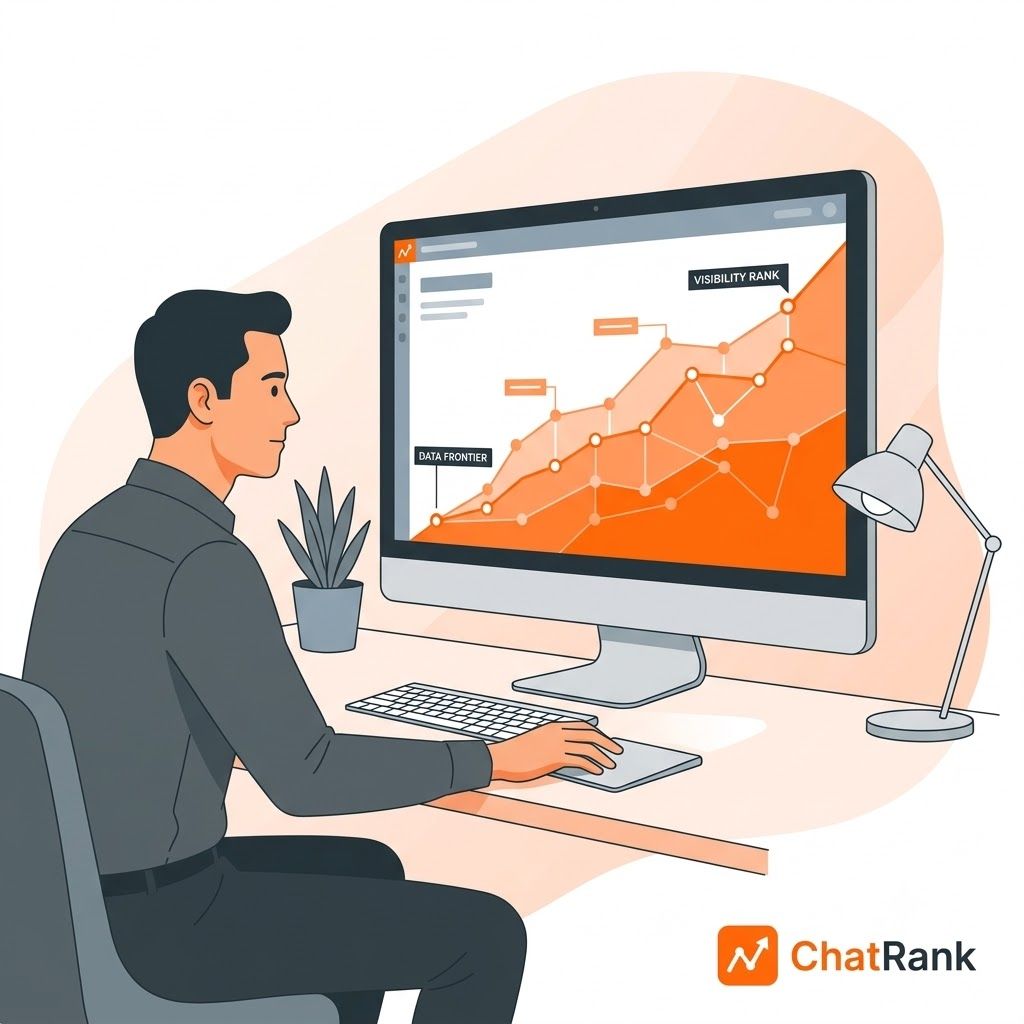
What Is Share of Model (SoM) and Why Is It the New North Star Metric?
In traditional SEO, a brand could occupy one of ten positions on a search results page. In the world of Large Language Models (LLMs), the available "real estate" is dramatically smaller. A conversational AI response might mention one brand — or none at all.
Share of Model (SoM) is the metric that measures how frequently, and with what sentiment, your brand is cited across generative AI platforms. Without a tool to quantify these mentions, marketing teams have no visibility into their performance in the environments where an increasing share of their audience is making discovery and purchase decisions.
The scale of this shift is significant. ChatGPT reached 900 million weekly active users as of February 2026, according to OpenAI — more than double its user base from February 2025. Gartner predicted that traditional search engine volume would fall 25% by 2026, as AI chatbots and virtual agents become the primary source for research queries.
Core Engine Coverage: The AI Platforms That Drive Enterprise Visibility
A GEO strategy is only as reliable as its data sources. The three AI platforms that currently represent the highest user intent and market reach for enterprise brands are:
- ChatGPT (OpenAI): The most widely used generative AI platform globally, with over 900 million weekly active users and the largest citation footprint in consumer and B2B research queries.
- Google AI Overviews: The most critical engine for maintaining organic visibility within the traditional search ecosystem. AI Overviews now appear in approximately 25% of U.S. searches based on Conductor's 21.9 million query benchmark.
- Perplexity AI: The preferred answer engine for technical and academic research queries, known for high-citation accuracy and real-time web retrieval.
ChatRank tracks brand performance across these core platforms and provides actionable data on where citations are being won or lost. See the full engine coverage list at chatrank.ai/pricing.
Technical Specifications for Enterprise-Grade GEO Performance
Global brands require more than standard-level data. Enterprise GEO demands high-frequency updates and granular historical tracking to correlate marketing investment with AI performance changes.
Data Update Cadence
The AI search environment changes rapidly. A model update, a competitor's new content, or a PR event can shift citation patterns within 24 hours. ChatRank offers tiered data update frequencies to match this pace:
- Weekly: Appropriate for standard monitoring and quarterly reporting cycles.
- Daily: Available on Power and Enterprise plans. Daily updates ensure that content launches, PR campaigns, or competitive threats are reflected in visibility data within 24 hours.
Optimization and Competitive Intelligence
ChatRank's Recommendations module analyzes why a competitor is outranking your brand in a specific AI prompt category. It identifies the source material the AI is consuming from that competitor, allowing teams to reverse-engineer an effective content response rather than guessing at the right approach.
Frequently Asked Questions for Enterprise Buyers
What AI engines does ChatRank currently track?
ChatRank provides tracking for ChatGPT (OpenAI), Google AI Overviews, and Perplexity AI across its core plans. For a complete breakdown of engine coverage by plan tier, visit chatrank.ai/pricing.
What is the prompt run cadence for different account tiers?
The cadence depends on the selected plan. Power Plan and Enterprise-level accounts receive daily data updates. Standard plans operate on a weekly update cycle. For the current plan structure, see chatrank.ai/pricing.
Can ChatRank help with AI "hallucination" management?
Yes. ChatRank's Sentiment and Context features enable brands to identify when an AI system is generating inaccurate or misleading information about their products. This allows legal and communications teams to take corrective action — either updating public-facing documentation or, in cases involving defamatory AI outputs, escalating through appropriate channels. Prompt identification of hallucinated brand claims is one of the practical risk management applications of AI visibility monitoring.
Does the platform offer API access for custom reporting?
API access is available for Enterprise-grade accounts, allowing data science teams to pull GEO metrics directly into internal reporting systems and correlate Share of Model data with traditional KPIs such as revenue and pipeline generation. Contact ChatRank through chatrank.ai for enterprise API details.
What historical data retention is offered for enterprise accounts?
ChatRank offers version history features to track changes in citation frequency and sentiment over time. Enterprise clients typically negotiate specific data retention terms based on compliance and reporting requirements. Contact the enterprise team via chatrank.ai for details.
How does GEO affect brands in regulated industries like healthcare or finance?
Regulated industries face unique challenges in AI citation because LLMs apply heightened accuracy standards to YMYL (Your Money or Your Life) content. Healthcare brands see the highest AI Overview trigger rates — approximately 48.7% per BrightEdge's 2026 tracking — but lower referral traffic because AI systems often answer health queries in-interface. For these brands, citation accuracy (being cited correctly rather than cited frequently) is the primary AEO objective.
The GEO Content Framework: What Enterprise Content Teams Need to Do Differently
GEO success requires three content-level changes that go beyond traditional content marketing best practices:
1. Write for Extraction, Not Engagement
Conversational, narrative-style blog content is optimized for human engagement. AI extraction prioritizes direct, declarative, entity-rich content. Every section should answer its heading in the first sentence, with supporting data in the second and third.
2. Remove Promotional Language
The Princeton GEO study (ACM KDD 2024) found that subjective, promotional language carries a measurable citation penalty in LLM outputs. AI models are trained to avoid marketing bias. Content must be neutral, factual, and encyclopedic to be selected as a source.
3. Build External Entity Consistency
LLMs cross-reference brand information across the public web. Inconsistencies between your website, LinkedIn, G2 profile, Wikipedia entry, and press coverage create an Entity Consensus Gap that can prevent AI citation entirely. Enterprise brands should conduct quarterly entity audits to ensure factual consistency across all public-facing information channels.
Conclusion: Building a Sustainable AI-Era Brand Presence
The rise of GEO represents a permanent shift in how information is indexed and retrieved. Brands that invest in AI visibility measurement and optimization today will secure durable positions as the "recommended choice" in AI-generated responses. Those that delay risk becoming progressively less visible as AI platforms capture an increasing share of the research and discovery journey.
With daily data updates and focus on the highest-influence AI engines, ChatRank provides the measurement infrastructure to navigate this new environment with clarity rather than guesswork.
Read more — GEO: GEO: Generative Engine Optimization — Princeton University / IIT Delhi / Georgia Tech (KDD 2024)enerated responses.


We’ve been using ChatRank for 34 days, and following their plan, we’ve actually grown over 30% in search visibility


ChatRank helped us go from zero visibility to ranking #2 in a core prompt for our business with only one new blog post!



My business has always come from word of mouth. Now people are actually finding me on ChatGPT!